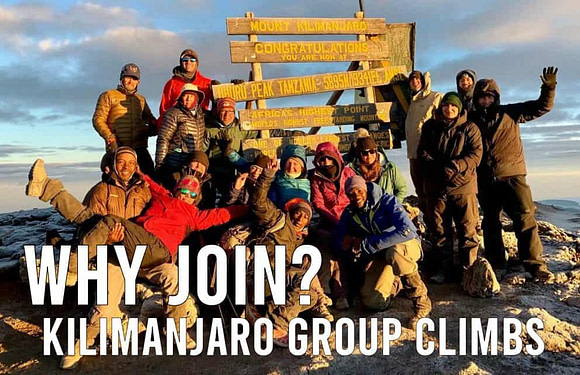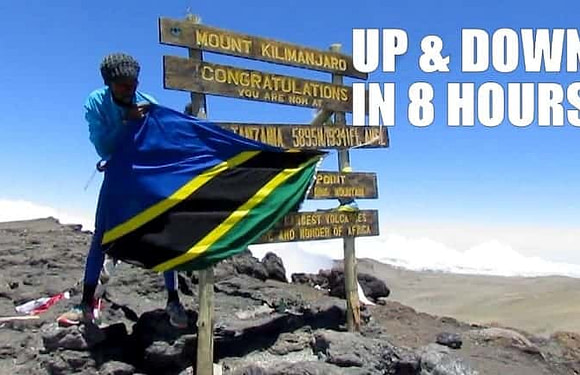






















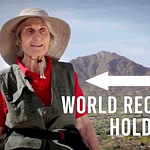


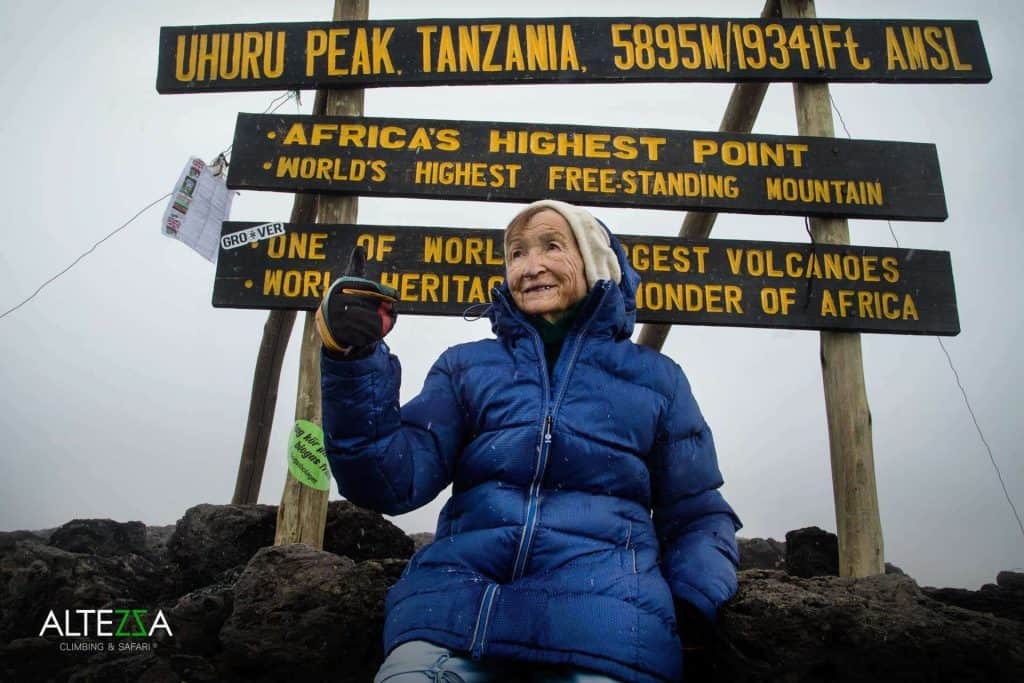
When she finally stepped onto the roof of Africa, 86-year-old Angela Vorobyova didn’t just celebrate—she danced joyously with her mountain guide. Accompanied by her 62-year-old physicist daughter, Vera, and a dedicated local support crew, Vorobyova made history by summiting the 19,341-foot (5,895-meter) Uhuru Peak, achieving what was then a groundbreaking Guinness World Record. Yet, for the retired Russian teacher, a deeply personal motivation made the ultimate triumph even sweeter.
A Lifetime Promise Kept Above the Clouds
Vorobyova dedicated her grueling trek to the memory of her older sister, Lida, who tragically passed away from pneumonia at just 12 years old in 1935. She intentionally chose October 29 for her summit push to honor her sister’s birthday.
“Eighty years ago, I made a promise to my sister Lida that I would travel for both of us,” Vorobyova shared in an emotional interview with The Siberian Times. “I loved her.”
Battling Altitude Sickness and Seasonal Rains
The seven-day trek up the mountain proved to be an extraordinary physical test. Speaking through a translator to the news network RT, Vorobyova recalled, “It was extremely hard.”
By the second and third days of the ascent, severe ear ringing set in—a common milestone of altitude sickness. Acute Mountain Sickness (AMS) happens when the human body struggles to adjust to lower oxygen concentrations at high elevations. While mild symptoms like headaches, nausea, and dizziness are incredibly common for Kilimanjaro climbers, severe, unmanaged altitude sickness can lead to life-threatening conditions like HAPE or HACE.
“When I tried to speak, my ears hurt, so for the entire week I just whispered,” Vorobyova noted. “I also couldn’t eat. I drank tea with a teaspoon of honey because I needed the energy to keep going. The weather wasn’t going great either.”
Climbing in late October presents distinct environmental risks, as the region transitions into the short rainy season usually beginning in November. The trekking team experienced standard seasonal shifts firsthand: clear, warm mornings gave way to heavy cloud cover and sudden downpours that completely soaked their gear with minimal opportunities to dry out on the trail.
The Power of a Dedicated Mountain Support Team
Despite the adverse weather and physiological strain, turning around was never an option. “When people asked how I managed to finish the climb, I tell them that there was no way I could have stopped,” she explained. “I believe if you start something, you have to finish it.”
Crucial to the success of the mother-daughter duo was their seasoned mountain crew. Standard Kilimanjaro expeditions utilize an extensive network of professional guides, cooks, and porters who transport equipment and fresh provisions. Mountain chefs prepare nutrient-dense meals featuring rice, pasta, fresh vegetables, and chicken to keep climbers fueled through high caloric demands.
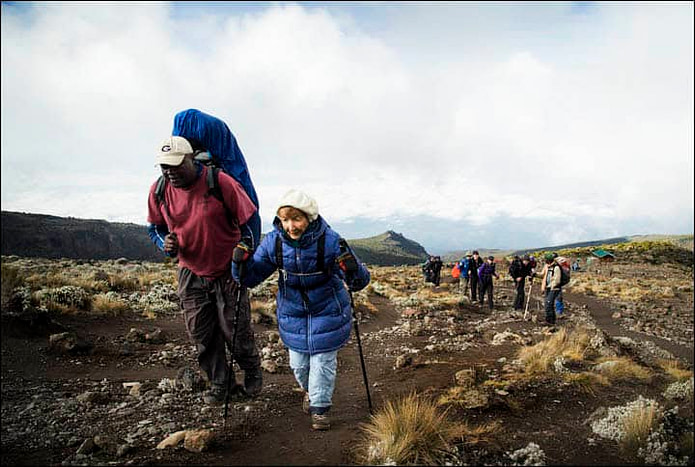
Remarkably, Vorobyova’s guides noted that she required no supplemental oxygen or medical first aid during her entire journey. While reputable operators carry bottled oxygen on every climb, it is strictly reserved as an emergency medical treatment to safely descend climbers suffering from severe altitude complications.
Inspirational Predecessors on the Roof of Africa
Vorobyova’s successful summit surpassed the previous record held by American Robert Wheeler, who completed the trek at age 85 on October 2, 2014. Wheeler, a retired Army lieutenant colonel and psychology professor, also shared the experience with his child, 46-year-old William “Jack” Wheeler, after previously scaling landmarks like Mt. Whitney and Mt. Fuji.
Before Wheeler, the record belonged to Martin Kafer of Switzerland, who was also 85 but slightly younger by a matter of months. Wheeler later published a book detailing his insights, Mountains and Minds, which blends high-altitude adventure with psychological philosophy to explore human determination.
A Passion for High Altitudes
Vorobyova’s drive to push her limits never wavered. “At an altitude of 4,000 meters, we even danced the tango with our guide,” she told reporters. “And at 5,000 meters we saw the sunrise above the clouds. That’s impressive.”
She attributed her resilience to a disciplined daily routine, which includes regular long-distance walking, light exercise, and cold-water hydrotherapy. Her next goal? A trip to explore the high-altitude trails of Machu Picchu, Peru.
“I love the mountains,” Vorobyova said. “They have always attracted me. Uhuru Peak is not covered by sheer technical ice walls like Everest or Mount Elbrus, so it requires no special mountaineering skills. But it is a massive mountain, and it remains a beautiful temptation to climb the highest peak in Africa.”