




























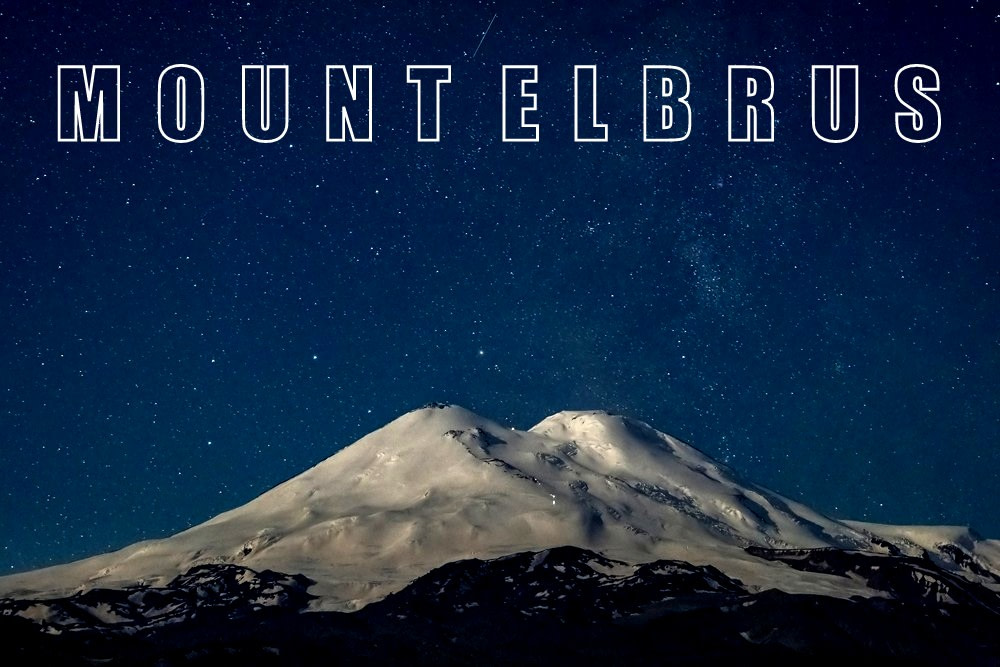
Where is Mount Elbrus Located?
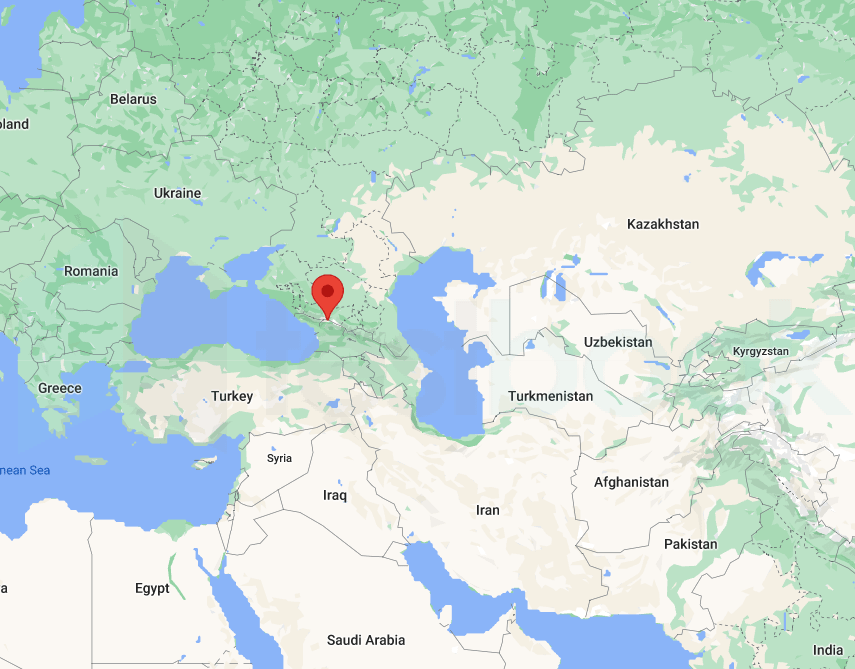
Mount Elbrus is located in the western Caucasus Mountains of southern Russia, near the border with Georgia. It sits within the Kabardino-Balkaria Republic, north of the main Greater Caucasus range. The nearest mountain town is Terskol, about 6 miles (10 km) from the mountain. Mineralnye Vody, roughly 90 miles (145 km) away, serves as the primary airport for climbers.
How Tall is Mount Elbrus?
Mount Elbrus stands at 18,510 feet (5,642 m), making it the highest mountain in Europe. It is higher than Mont Blanc and is included on most Seven Summits lists as Europe’s continental high point. Elbrus has two summits, with the western summit being the true high point.
How Was it Formed?
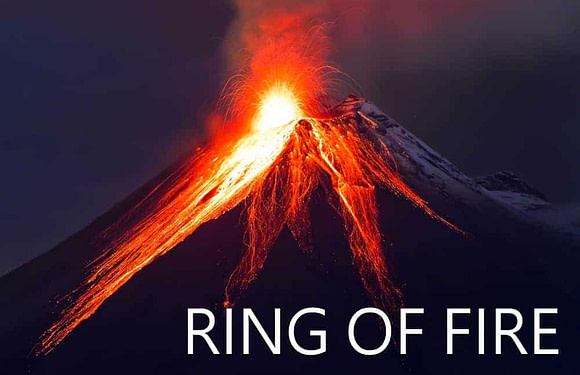
Mount Elbrus is a dormant stratovolcano formed through volcanic activity associated with tectonic compression between the Arabian Plate and the Eurasian Plate. Unlike many European peaks, Elbrus is volcanic rather than folded sedimentary rock. Its last known eruption occurred around 50 AD, and there is no current volcanic activity.
What Does the Name Mean?
The name Elbrus is believed to originate from ancient Iranian languages, meaning “high” or “watchtower.” Some linguists connect it to the Alborz Mountains of Iran, which share the same root word. The name reflects Elbrus’s prominence over the surrounding Caucasus landscape.
How Long Does it Take to Climb?
Climbing Mount Elbrus typically takes 6 to 9 days, depending on the route and acclimatization approach. Most guided climbs follow a 7 or 8-day itinerary that includes acclimatization hikes, rest days, and a summit attempt.
How Hard is it to Climb Mount Elbrus?
Mount Elbrus is not technically difficult by its standard south route, but it is physically demanding. The primary challenges are altitude, cold, and weather. At the summit, oxygen levels are roughly 50% of sea level. Fatigue, headaches, and nausea are common in unacclimatized climbers.
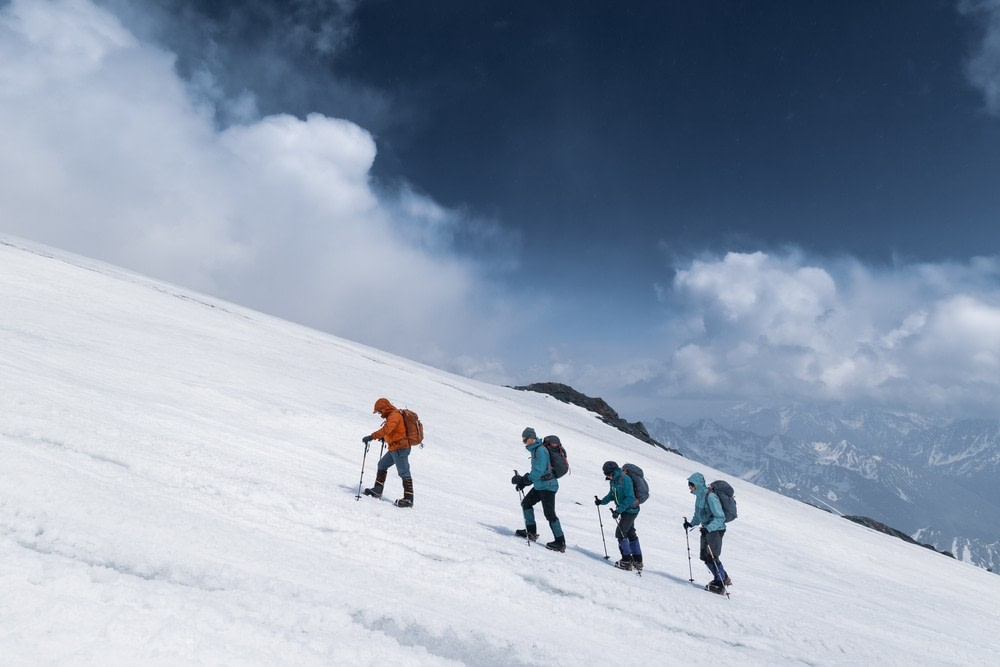
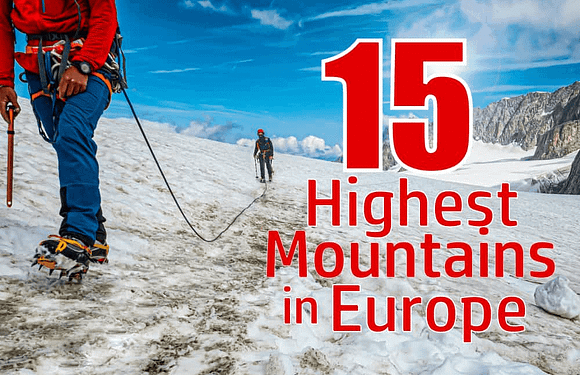
Summit day is long, usually 10 to 14 hours round trip. Climbers must ascend roughly 5,000 to 6,000 feet (1,524 to 1,829 m) from high camp. Most climbers carry packs weighing 20 to 30 lbs (9 to 14 kgs). Crampons and an ice axe are mandatory due to glaciated terrain. While slopes are not steep, crevasses and sudden weather changes pose real hazards.
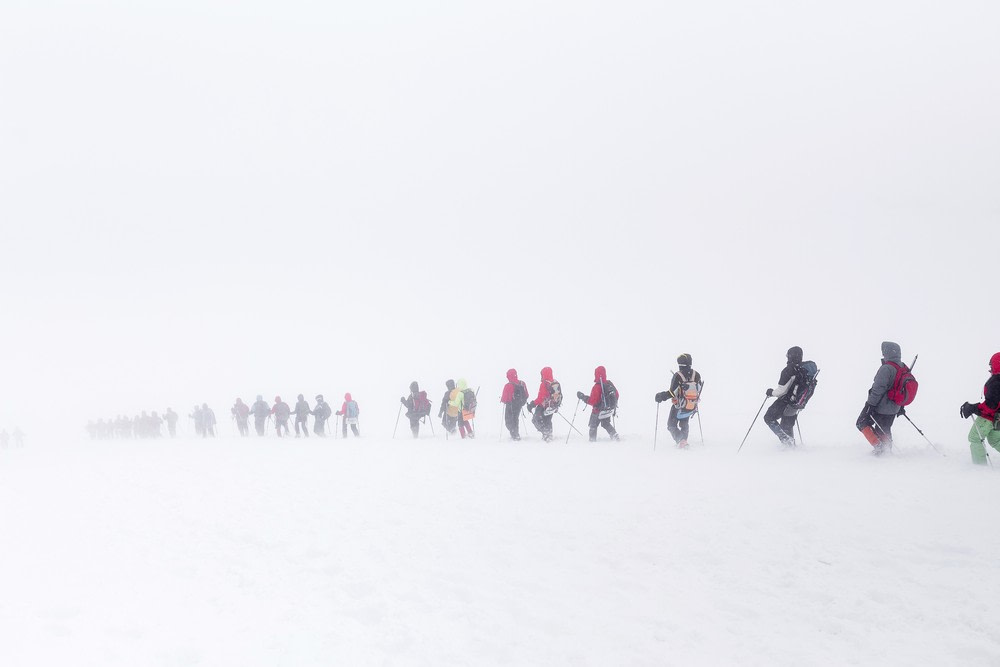
Elbrus is especially dangerous in poor visibility. Large sections of the upper mountain are broad and lack distinct features. In whiteout conditions, climbers can lose the route and descend into dangerous terrain. Many accidents on Elbrus are caused by navigation errors rather than falls.
The north route is more demanding and far less developed. Climbers start from lower elevations, establish multiple camps, and operate with greater self-sufficiency. Technical difficulty remains limited, but endurance, navigation, and judgment become critical.
What is the Success Rate on Mount Elbrus?
Success rates on Mount Elbrus are relatively high compared to other Seven Summits peaks. Well-organized teams on the south route often achieve success rates of 60% to 70%. Most failures are due to weather, altitude illness, or exhaustion rather than technical difficulty.
Can Beginners Climb Mount Elbrus?
Mount Elbrus is often described as beginner-friendly, but that label can be misleading. Beginners with strong fitness, cold-weather experience, and proper acclimatization can succeed. However, total novices often struggle with crampon use, prolonged cold exposure, and long summit days.
Prior experience above 14,000 feet (4,267 m) is strongly recommended. Climbers without altitude exposure face a higher risk of AMS. Basic glacier travel skills are helpful, even though rope teams are commonly used.
Who Was the First Person to Climb Mount Elbrus?
The first recorded ascent of Mount Elbrus was made in 1829 by Killar Khashirov, a local guide, during a Russian scientific expedition led by General Georgy Emmanuel. The higher western summit was first climbed in 1874 by a British team led by Florence Crauford Grove.
How Many People Climb Mount Elbrus Per Year?
Approximately 8,000 to 10,000 climbers attempt Mount Elbrus each year. Most climb via the south route using huts, chairlifts, and established infrastructure. The north route sees far fewer climbers due to its logistical and physical demands.
How Do You Train to Climb Mount Elbrus?
Training should focus on aerobic endurance, leg strength, and cold-weather tolerance. Long hikes with a weighted pack, stair climbing, and sustained cardio sessions are essential. Climbers should be capable of hiking 8 to 10 hours in snow and wind.
Practicing crampon use, ice axe self-arrest, and travel on glaciated terrain is important. Mental resilience also matters. Whiteouts, wind, and monotony can erode focus. Most climbers should plan 3 to 5 months of structured training.
What is the Best Time to Climb Mount Elbrus?
The main climbing season runs from late May through mid-September. June, July, and August offer the most stable conditions, though storms can occur at any time.
Summer summit temperatures often range from 5°F to 15°F (-15°C to -9°C), with wind chills much lower. Snow is typically firm in the early morning, which improves climbing conditions.
Outside the main season, conditions become severe. Winter ascents involve extreme cold, violent winds, and limited daylight. Temperatures can drop below -30°F (-34°C). Only experienced winter mountaineers attempt Elbrus during this period.
What are the Different Climate Zones on the Mountain?
Mount Elbrus spans several climate zones.
Lower Slopes (Below 8,000 feet): Alpine meadows and forested terrain with mild summer temperatures and frequent precipitation.
Mid-Mountain (8,000 to 14,000 feet): Subalpine and glacial environment. Snowfields dominate. Temperatures drop sharply at night. Winds increase.
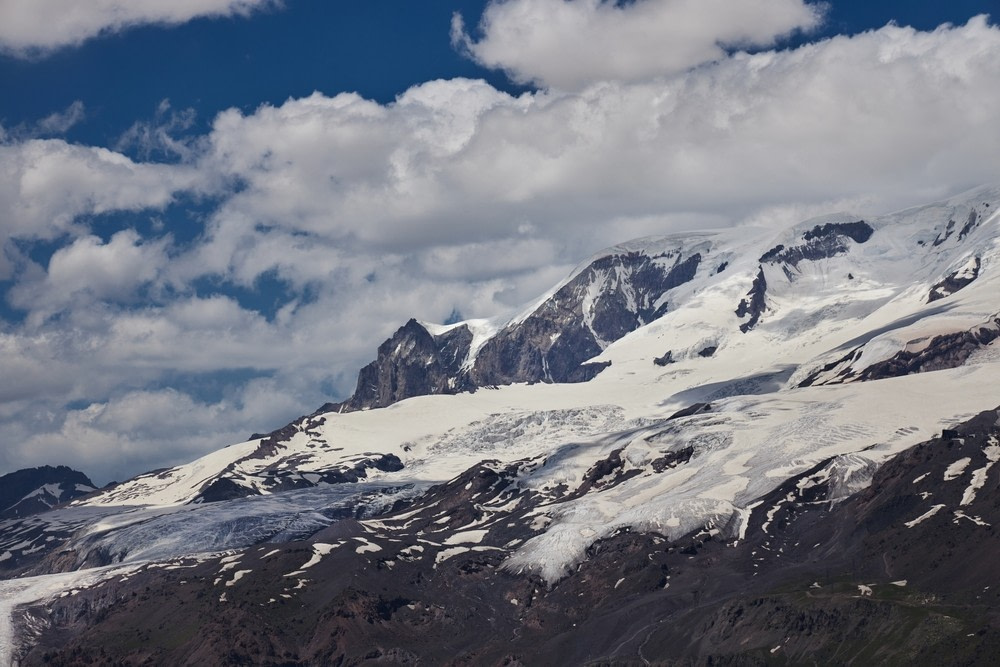
High Mountain (Above 14,000 feet): Arctic conditions with permanent ice and glaciers. Temperatures remain below freezing. Weather shifts rapidly and visibility can disappear without warning.
How Many Climbing Routes Are on Mount Elbrus?
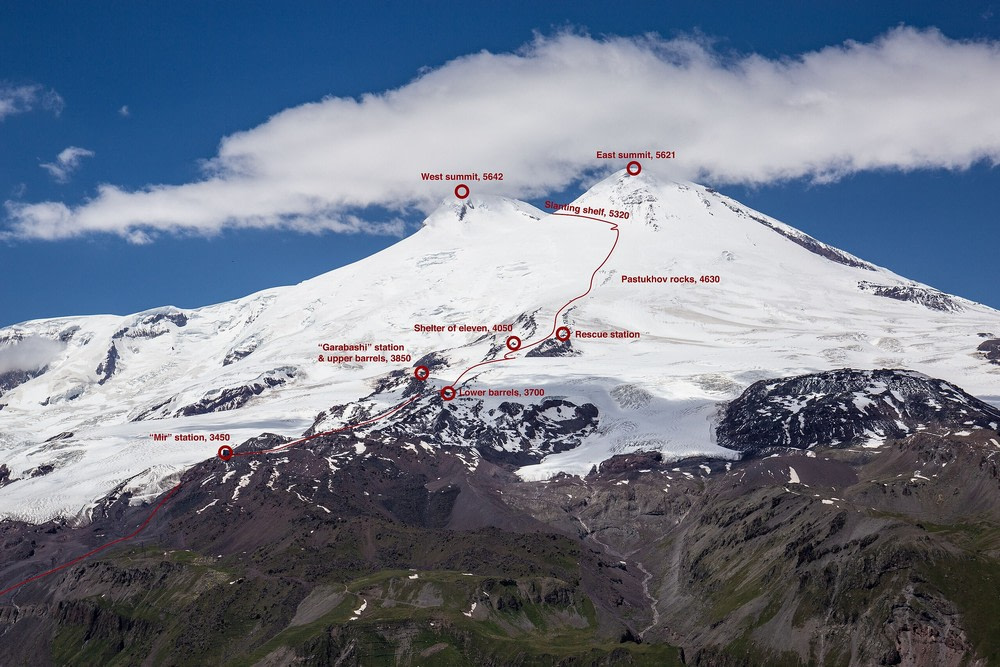
There are two primary routes on Mount Elbrus. They differ sharply in infrastructure and climbing style.
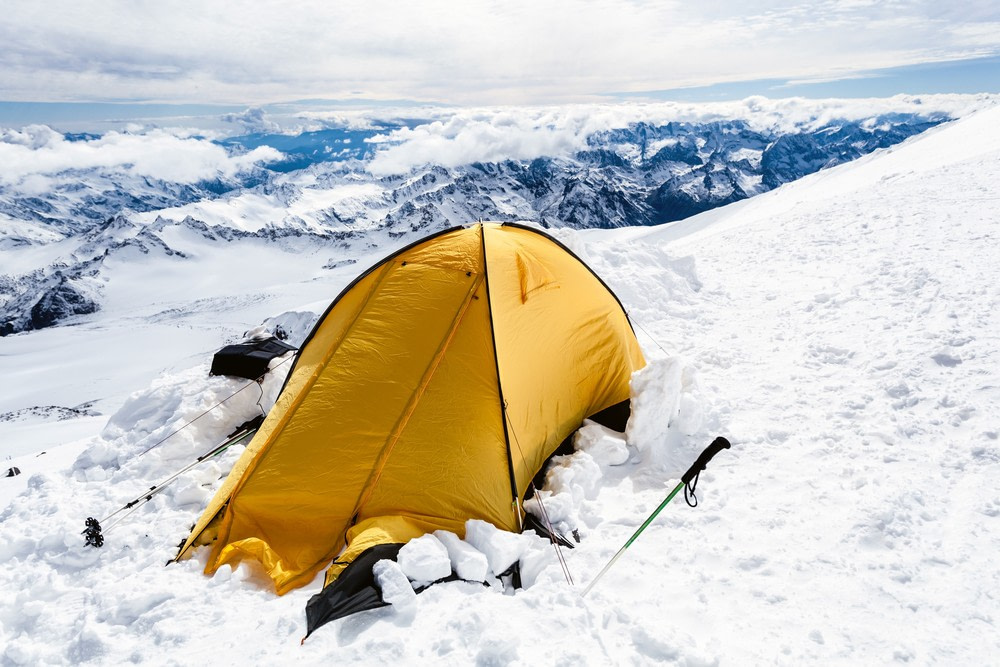
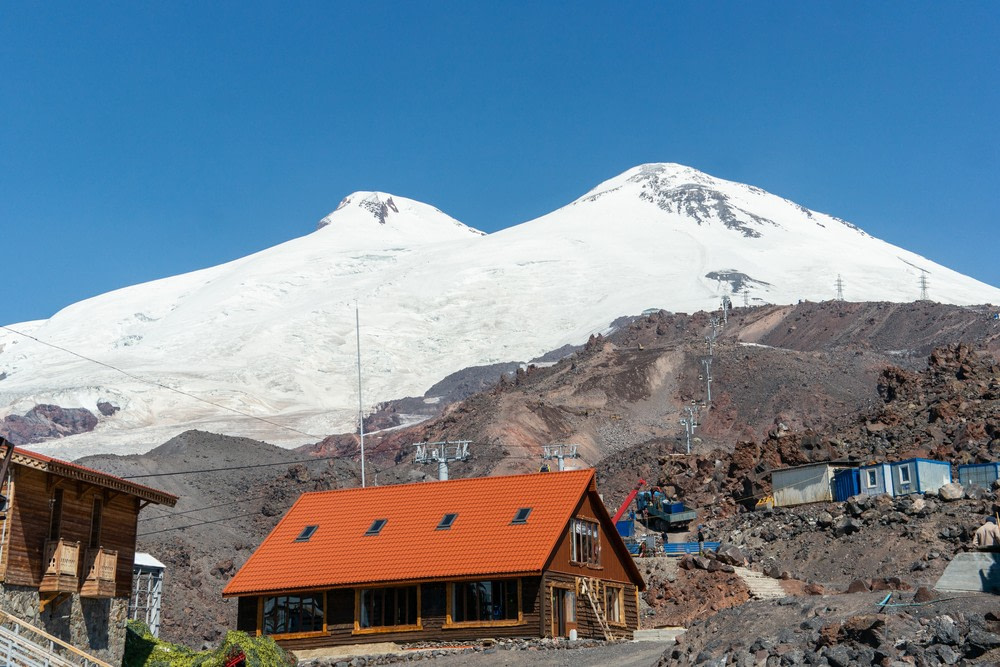
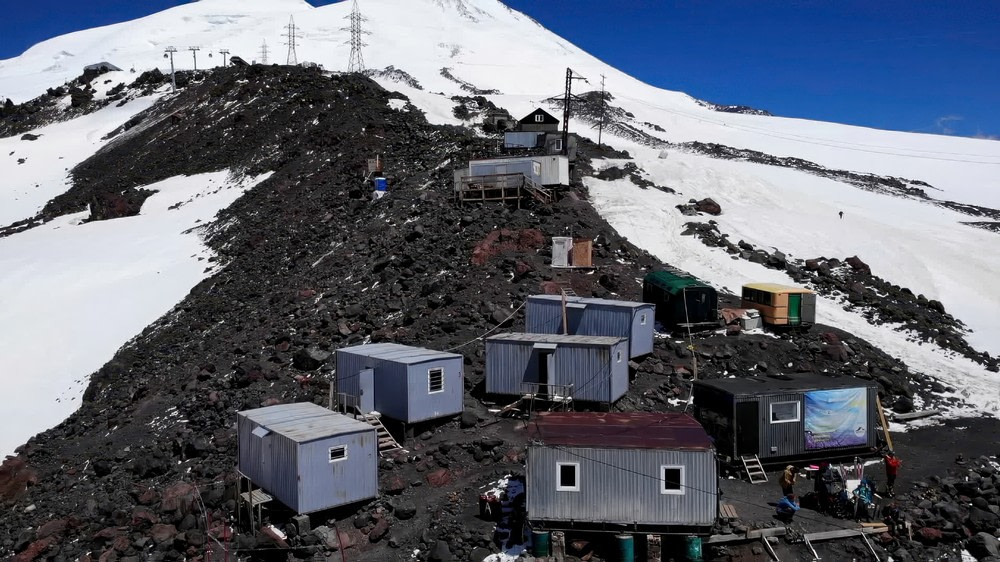
South Route: The most popular and least demanding option. Climbers use a lift-assisted system rather than moving camp progressively up the mountain. Cable cars and chairlifts reach roughly 12,500 feet (3,810 m). Most climbers stay in permanent huts or nearby tent platforms between 12,800 and 13,800 feet (3,901 to 4,206 m).
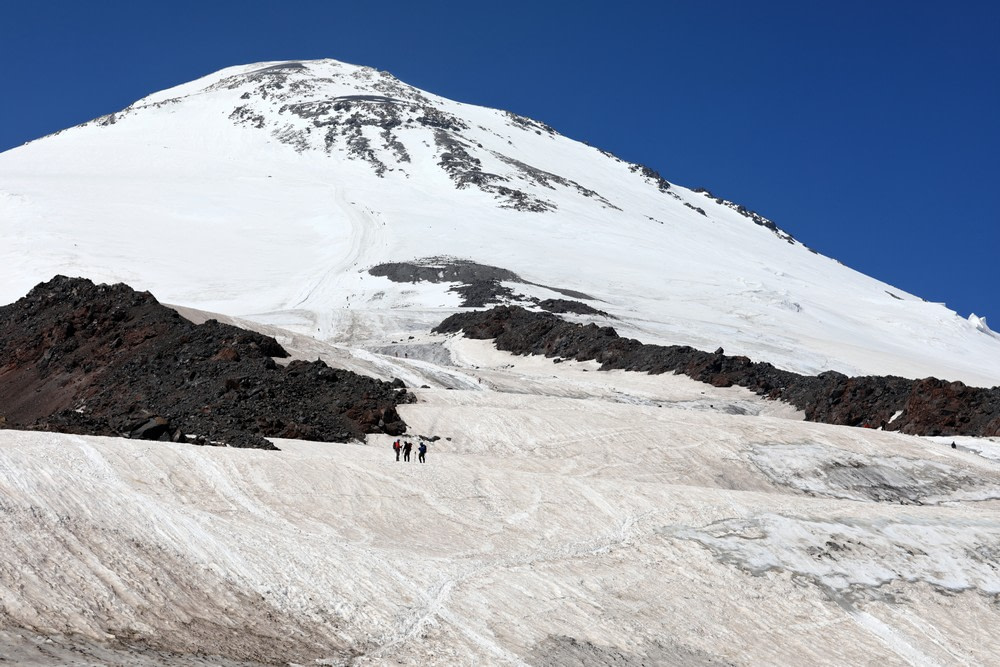
These huts serve as a fixed high camp for several nights. Acclimatization is done by climbing higher during the day, often to Pastukhov Rocks around 15,700 feet (4,785 m), then descending to sleep. The route follows a gradual glacial slope to the summit. Crevasses exist but are generally well-marked.
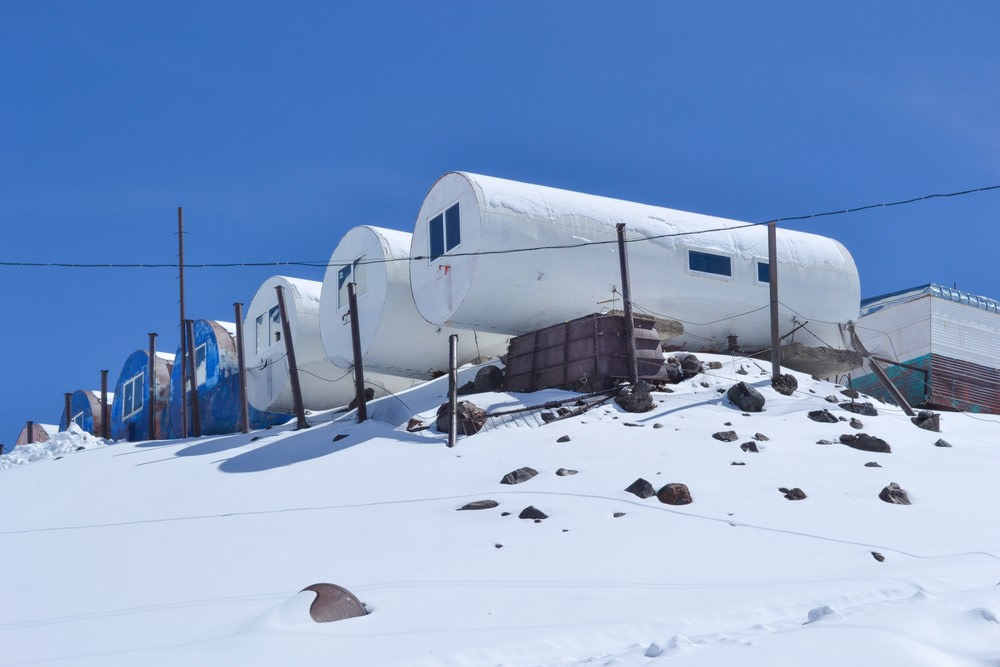
This system improves efficiency but compresses many climbers into a narrow elevation band, contributing to crowding, navigation issues, and a false sense of security.
North Route: A quieter and more committing climb. There is no lift access and no permanent huts. Climbers establish multiple camps from lower elevations and carry all loads themselves. The route demands greater endurance, navigation skill, and self-reliance. Weather delays are more serious, and rescue response is slower.
Several ski and mountaineering variations exist but are rarely attempted.
What is Summit Day Like on the South Route?
Summit day usually begins between 1:00 and 3:00 AM from huts or tents located between 12,800 and 13,800 feet (3,901 to 4,206 m). Some teams use snowcats on summit night to gain elevation, though this is optional and weather-dependent.
The route climbs steadily across glaciated terrain toward Pastukhov Rocks, then continues to the saddle between the two summits. The upper mountain is broad and featureless. In poor visibility, navigation errors are common, particularly during descent. Winds often intensify near the saddle and final ridge.
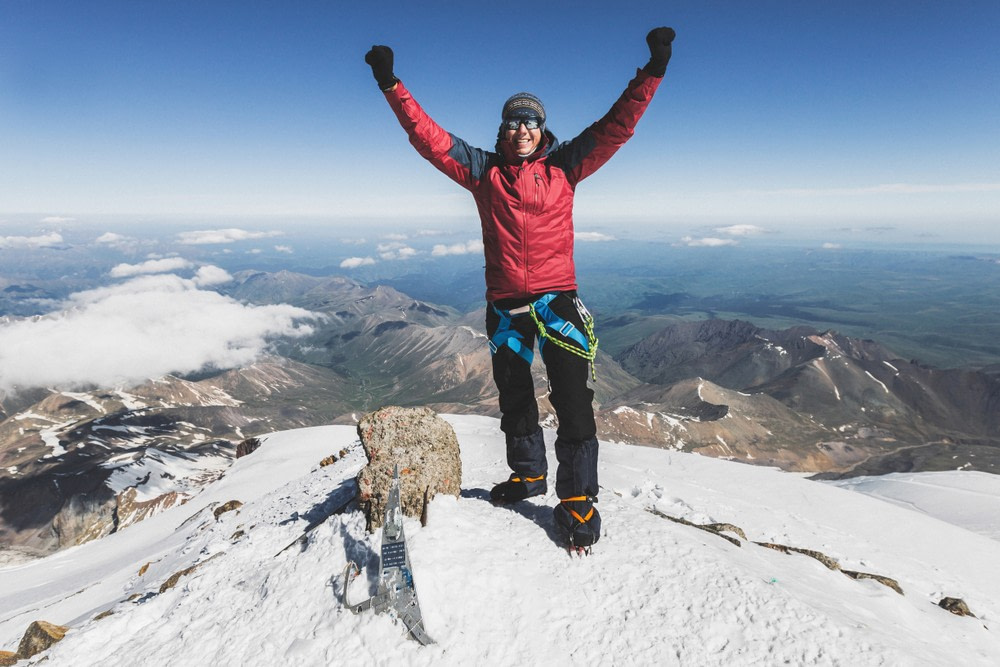
Overreliance on snowcats can reduce acclimatization and increase AMS risk. Most climbers reach the summit in 6 to 8 hours and descend the same route, returning to camp by early afternoon.
How Much Does it Cost to Climb Mount Elbrus?
A guided Mount Elbrus climb typically costs between $3,000 and $6,000. Prices vary based on group size, support level, and logistics.
Costs usually include airport transfers, lodging, lifts, huts, guides, and meals on the mountain. Additional expenses include visas, gear rental, and personal equipment. Russian visa requirements add time and paperwork and should be addressed well in advance.
Independent climbers can spend less but must manage transport, navigation, and safety themselves.
How Many People Have Died on Mount Elbrus?
Dozens of climbers have died on Mount Elbrus. Most deaths result from exposure, altitude illness, falls, or disorientation during whiteouts. Rescue services operate on the mountain, but response time depends heavily on weather and visibility. Assistance is not guaranteed during storms or high winds.
What Animals Live on Mount Elbrus?
Lower elevations support wildlife such as mountain goats, foxes, hares, and marmots. Birds of prey, including eagles, are occasionally seen. Above 10,000 feet (3,048 m), animal life becomes sparse. The upper slopes are dominated by ice and snow.
How Does Mount Elbrus Compare to Kilimanjaro?
Mount Elbrus and Kilimanjaro are often compared, but the experiences differ significantly.
Mount Elbrus is harder overall than Kilimanjaro, even though Kilimanjaro is taller. Elbrus introduces glacier travel, which fundamentally change the nature of the climb. Climbers must use crampons and an ice axe and move safely across snow and ice. Navigation matters, especially in poor visibility. Mistakes on Elbrus are more consequential.
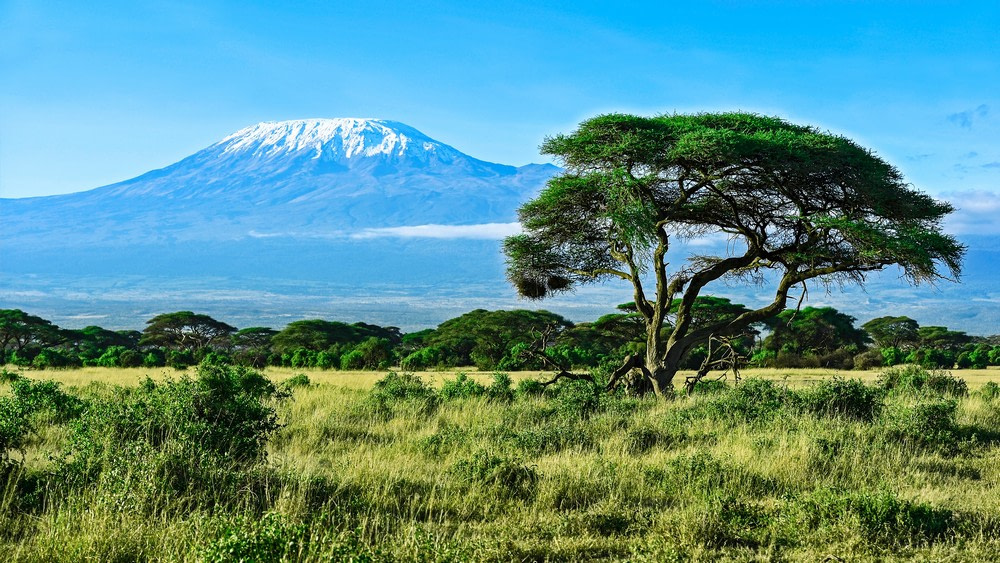
Cold and exposure are the defining challenges on Elbrus. Climbers are exposed for long periods in the dark on summit day. Frostbite is a real risk, especially during descents when fatigue sets in. Kilimanjaro is also cold near the summit, but conditions are generally milder and less prolonged. Severe cold exposure is uncommon for most climbers.
Elbrus also demands more self-sufficiency. While lifts, huts, and snowcats exist, they do not eliminate responsibility. Climbers still carry heavier packs, manage technical equipment, and make navigation decisions in featureless terrain. Whiteouts are common and have caused many accidents. Kilimanjaro, by contrast, is fully guided. Porters carry most of the load. Routes are well-defined, and navigation risk is low.
Kilimanjaro’s main difficulty is altitude. At 19,341 feet (5,895 m), it is higher than Elbrus. The ascent is rapid, which increases the risk of acute mountain sickness. Many climbers feel worse on Kilimanjaro than expected because the climb happens over fewer days. Elbrus is lower, but most itineraries allow more time for acclimatization, reducing altitude shock when climbed properly.