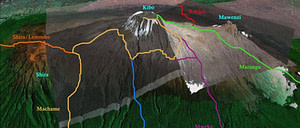
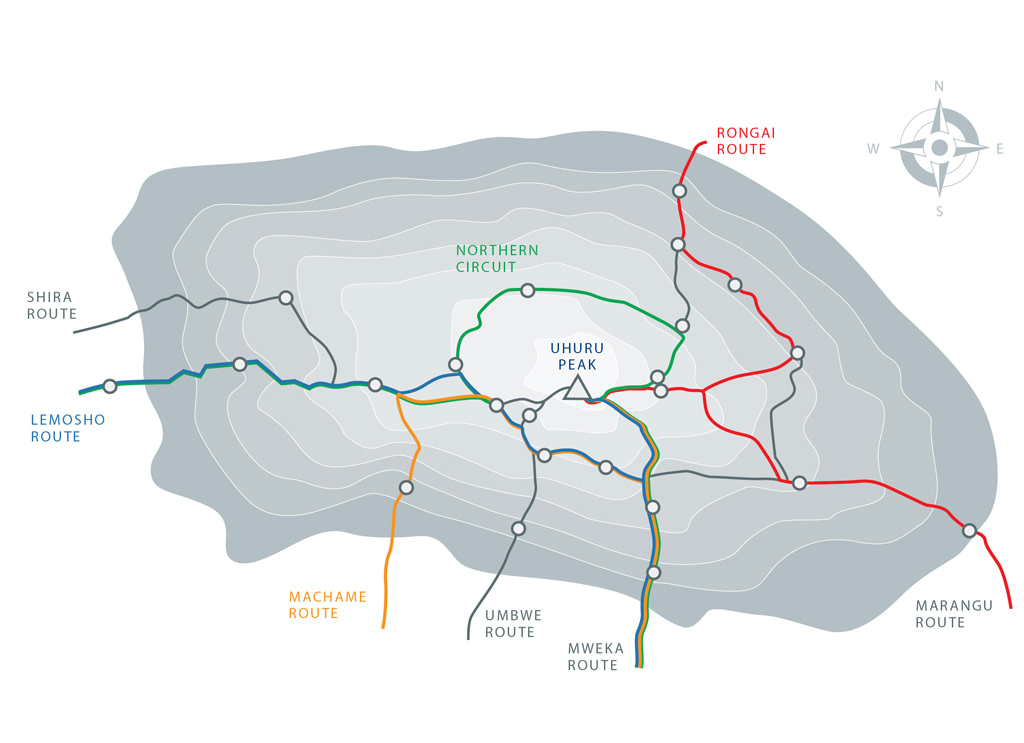
There are seven established routes to climb Mount Kilimanjaro.
Selecting a route is a tough choice for most. To find the best Kilimanjaro route for you, considerations should be taken for the route’s difficulty, scenery, and popularity. In this article, we will discuss the pros and cons of each route and give recommendations on which trail to use for your climb.
Our Recommended Routes
The Northern Circuit and the Lemosho route are best routes on Kilimanjaro. We strongly recommend one of these routes for the highest chance of success and strongest safety profile.
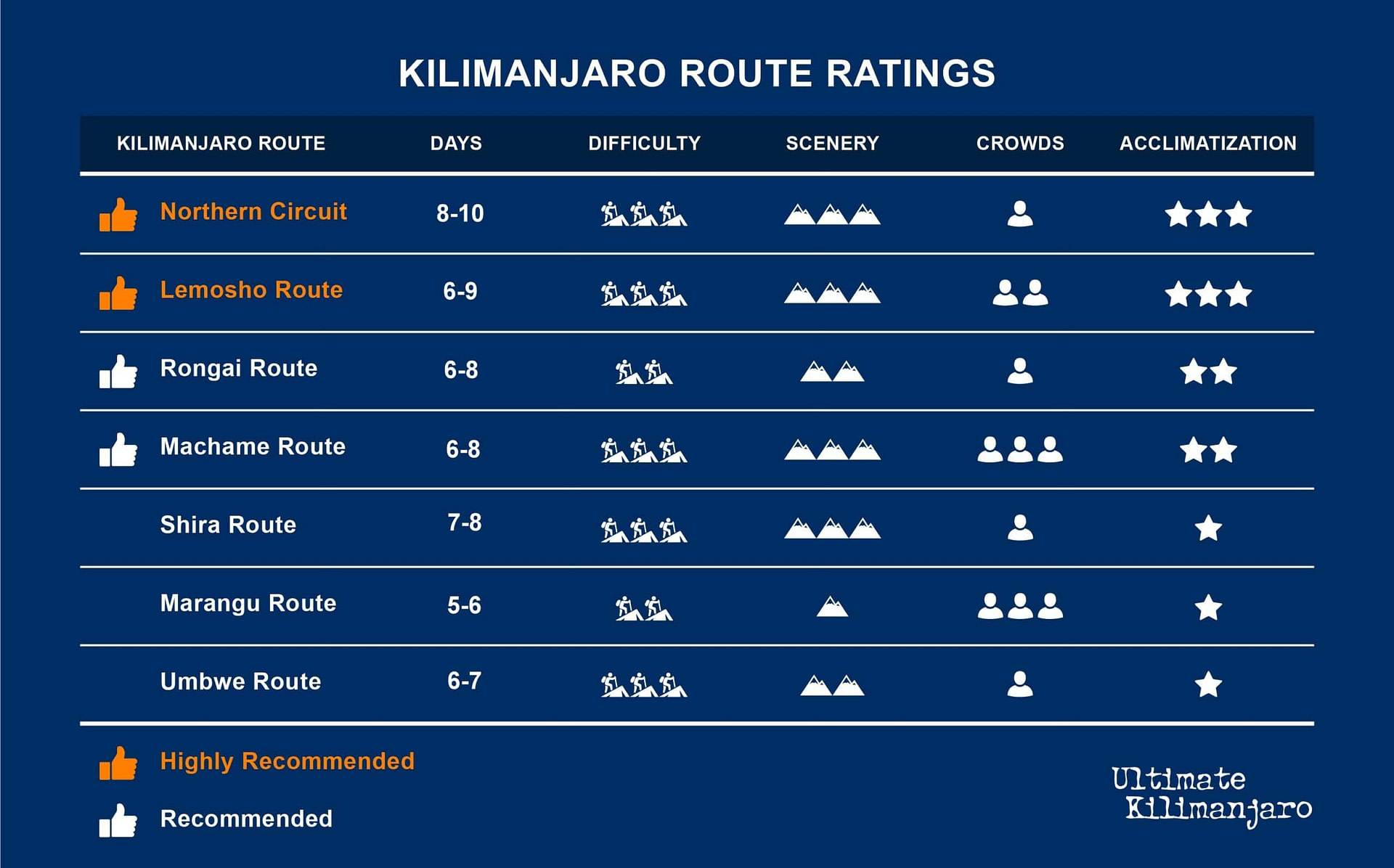
Of the seven established Kilimanjaro routes, we have two clear favorites and two other recommended routes. These are our preferred routes on Kilimanjaro.
It is estimated that tourists climb Kilimanjaro using the routes in the following percentages: Machame (45%), Marangu (40%), Lemosho (8%), Rongai (5%), Shira (1%), Northern Circuit (0%), Umbwe (0%). In contrast, Ultimate Kilimanjaro® clients use Lemosho (69%), Northern Circuit (19%), Rongai (6%), Machame (6%).
The reason for the difference in route popularity between us and other operators is that we guide on the routes with the most favorable combination of high success rates, excellent scenery, and low foot traffic. These are the attributes that our clients find the most important for their experience.
We operate our open group climbs on the 9 day Northern Circuit (standard and daytime summit variant), 9 day Lemosho (daytime summit variant), and 8 day Lemosho route. All routes are available as private climbs.
Northern Circuit Route – Highly Recommended
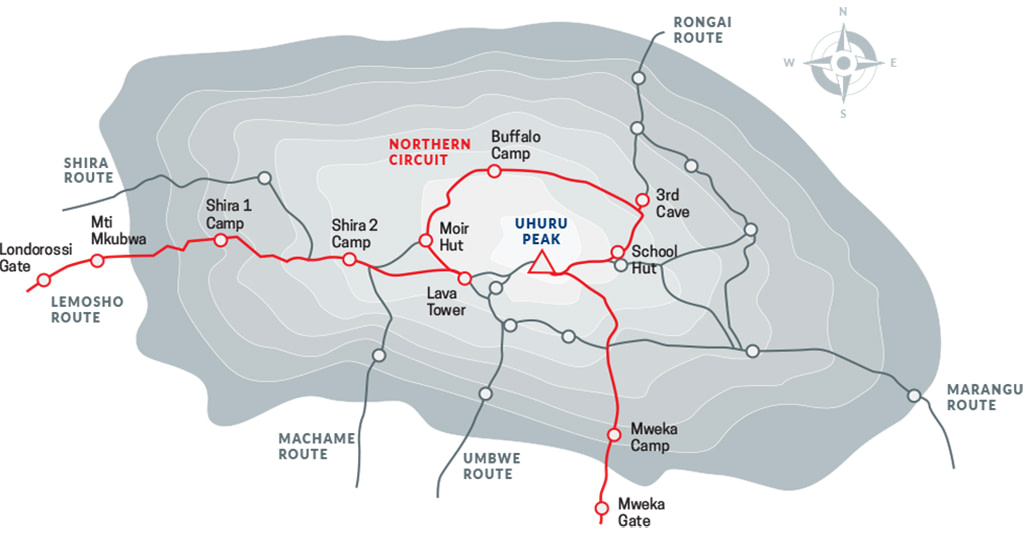

The Northern Circuit route is the newest, most exciting route on Kilimanjaro. It approaches the mountain from the west, then traverses around the quiet, rarely visited northern slopes. With fewer visitors overall, the route provides more solitude than other routes.
The standard itinerary is nine days, which is the longest standard route in both time and distance. This extended itinerary improves acclimatization, especially with multiple days spent around 13,000 feet. This results in the highest success rates for all routes on Mount Kilimanjaro.
With excellent acclimatization, varied scenery and a very low number of visitors, the Northern Circuit route is certainly one of the best routes on Kilimanjaro. We highly recommend this route.
Lemosho Route – Highly Recommended
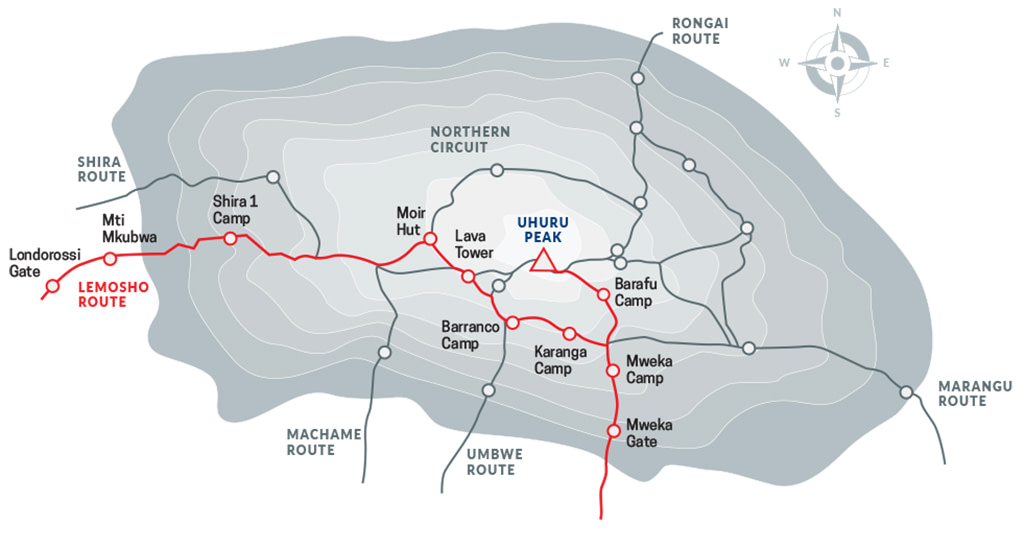

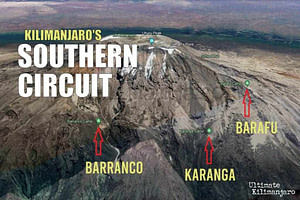
The Lemosho route is also one of the newer routes on Mount Kilimanjaro. The route begins in the west and crosses the Shira Plateau to Shira Camp. Climbers encounter low traffic until the route joins the main southern circuit trail, passing key landmarks like Lava Tower, Barranco, and Barafu.
The standard itinerary is eight days, which is the version we typically operate. The extra time on the mountain improves acclimatization and increases your chance of reaching the summit.
Lemosho is considered the most beautiful route on Kilimanjaro, with panoramic views from multiple sides of the mountain. It is our favorite route because it offers an optimal balance of great scenery, high success rates, and low foot traffic. Thus, Lemosho comes highly recommended. Most of our clients use Lemosho.
Rongai Route – Recommended
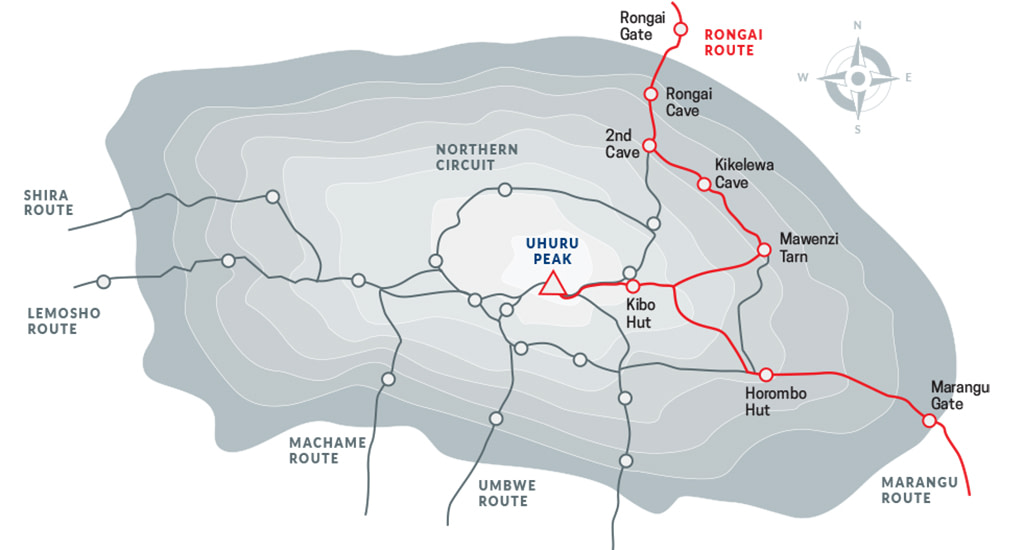

The Rongai route is the only route that approaches Kilimanjaro from the north, near the Kenyan border. Though gaining popularity amongst climbers, Rongai still sees very low foot traffic. It is a great option for those who would like a more remote hike, and for those who are climbing during the rainy season (the north side receives less precipitation).
The standard Rongai itinerary is seven days. This provides a more gradual ascent and better acclimatization than a shorter schedule.
Rongai’s scenery is less varied than the western routes, but it makes up for this by passing through true wilderness areas for days. It follows a gentler ascent profile than most routes, with less elevation gain and loss between camps. Rongai is recommended, especially for those with less backpacking experience.
Machame Route – Recommended
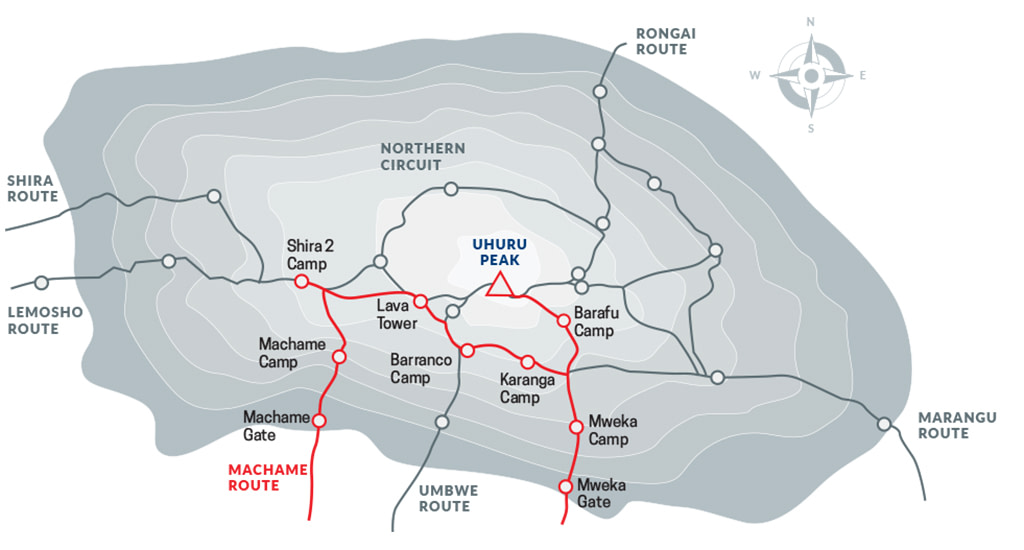

Known as the “Whiskey” route, the Machame route is the most popular route on the mountain. The path begins in the south, then heads east, traversing underneath Kilimanjaro’s southern ice field before summiting.
The standard itinerary is seven days. This provides a more gradual ascent and better acclimatization than a shorter schedule.
Machame offers consistently varied scenery throughout the climb. Because it is so widely used, expect more people on the trail and at camp, especially during peak season. Despite this potential drawback, Machame is still recommended.
Daytime Summit Routes
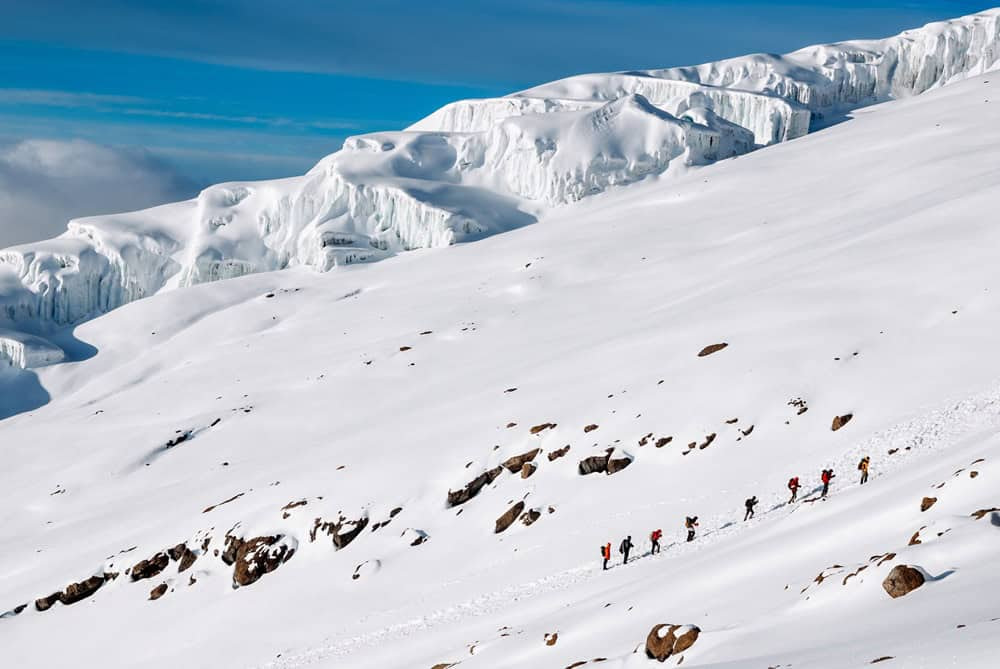
We offer “daytime summit” variations of our favorite routes. On standard itineraries, the summit attempt starts very early in the morning, around midnight. Climbers ascend in the darkness and typically reach the crater rim around sunrise. Thereafter, they generally make it to the summit sometime between 7:00 AM and 9:00 AM and descend to the final camp, arriving in the midafternoon to early evening.
There are several reasons why it is the norm to summit at night, as explained here. However, a big part of it is that it ensures there is enough time to descend to the last campsite while there is still daylight.
With Ultimate Kilimanjaro®, you have the option to avoid the midnight ascent. Our daytime summit route variations begin, as you might expect, during the daytime. Climbers sleep for a full night, start their hike in the morning, and reach the summit in the afternoon. Then, instead of descending all the way to the last campsite, they stay at high camp (around 15,000 feet/4,570 meters). These route variations add another day to the trip as the long descent is broken up into three days instead of two.
Daytime summits are available on the following itineraries:
- 10 day Northern Circuit (daytime summit)
- 9 day Northern Circuit (daytime summit)
- 9 day Lemosho (daytime summit)
- 8 day Rongai (daytime summit)
- 8 day Machame (daytime summit)
Other Routes
Below we discuss the remaining routes on Kilimanjaro.
Shira Route
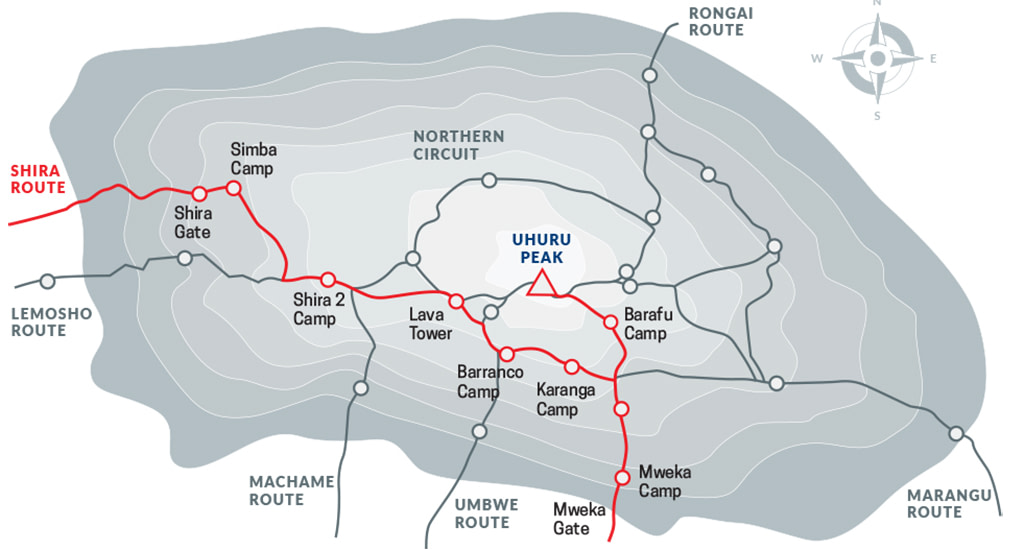

The Shira route approaches Kilimanjaro from the west and is nearly identical to the Lemosho route. In fact, Shira is the original western route and Lemosho is the improved version. The difference is the start: Lemosho begins at Londorossi Gate and treks through the rainforest to Shira 1 Camp, while Shira route uses a vehicle to transport climbers to Shira Gate, bypassing the rainforest section entirely.
On the first day, climbers begin their hike from 11,800 feet and spend their first night at the same elevation at Simba Camp. The route then merges with Lemosho and follows the southern circuit route to the summit. The standard itinerary is seven days.
Although Shira is a varied and beautiful route, Lemosho is the better choice for most climbers. Lemosho provides a more gradual ascent and more time at lower elevations, which supports acclimatization. Shira forces climbers to start high immediately, increasing the chance of altitude symptoms on the very first day, before the body has had time to adapt. For this reason, we do not recommend the Shira route.
Note that some operators call this the Lemosho route with a high altitude drop off. But in practice, they are guiding on the Shira route.
Marangu (“Coca Cola”) Route
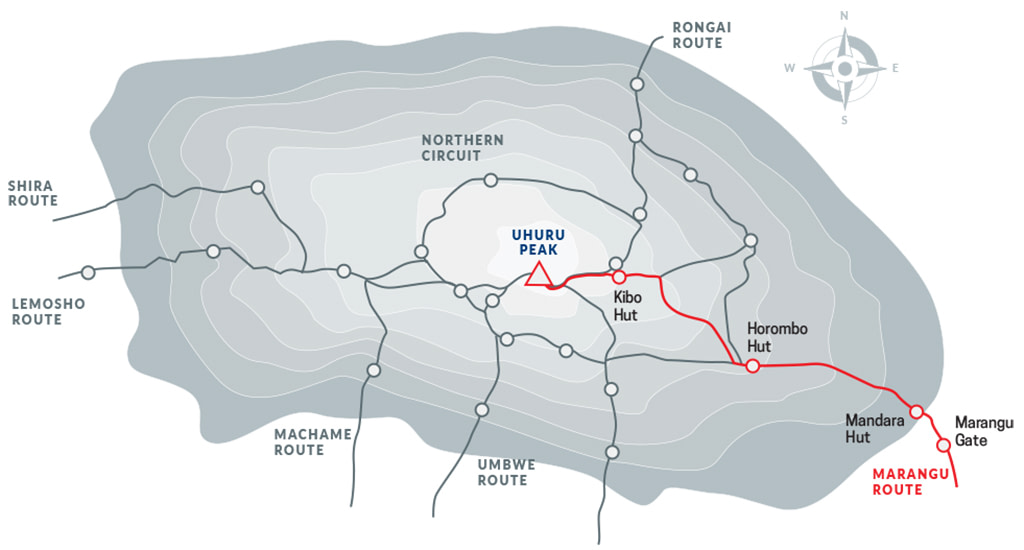

Known as the “Coca-Cola” route, the Marangu route is the classic trail on Mount Kilimanjaro. It is the oldest, most well-established route, and it closely follows the historic path used by Hans Meyer on his first successful ascent. Marangu ascends and descends via the southeast, making it the only route that has an out-and-back itinerary.
People choose the Marangu route because it is widely considered to be the “easiest” path on the mountain. It has a gradual slope and is the only route which offers huts accommodations, with dormitory-style sleeping quarters. However, the actual success rates are very low. The standard itinerary for the Marangu route is just five days, which does not allow enough time for proper acclimatization.
Despite its immense popularity, we do not recommend the Marangu route. The route has the least scenic variety of all the routes because the ascent and descent are done on the same path and it is the most crowded route for that reason. Marangu is most suitable during the rainy season, when hut accommodations are a major advantage. Outside of that scenario, most climbers are better served by routes with longer itineraries and better acclimatization profiles.
Umbwe Route
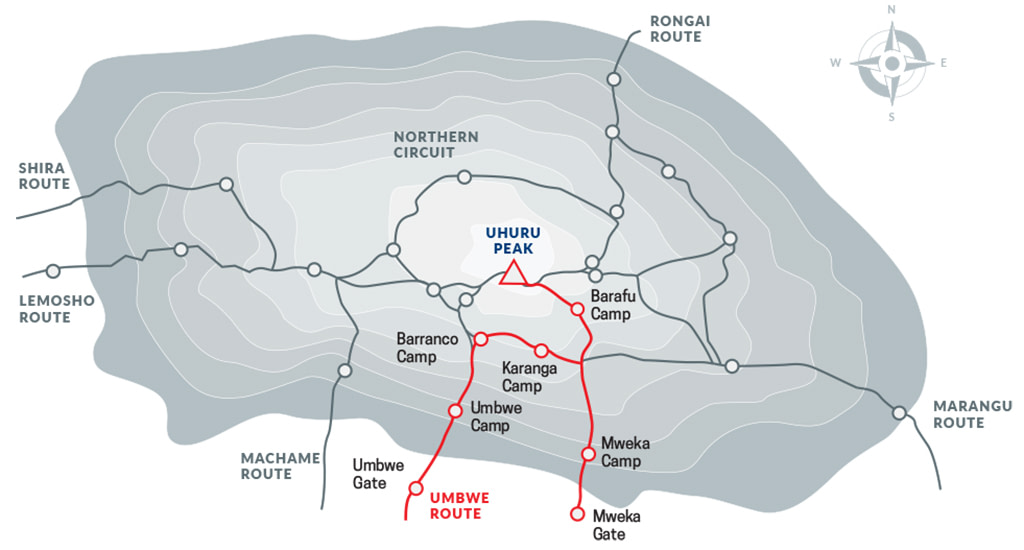

The Umbwe route is a short, steep and direct route. It is considered to be the most agressive and challenging way up Mount Kilimanjaro due to the quick ascent. Umbwe has low foot traffic on its initial approach from the south, but joins the busier southern circuit near Barranco Camp for the remainder of the climb.
The standard itinerary is six days.
We do not recommend Umbwe for our clients. It does not provide the necessary stages for altitude acclimatization. This route is suited for very strong hikers who are confident in their ability to acclimatize.
Crater Camp Routes
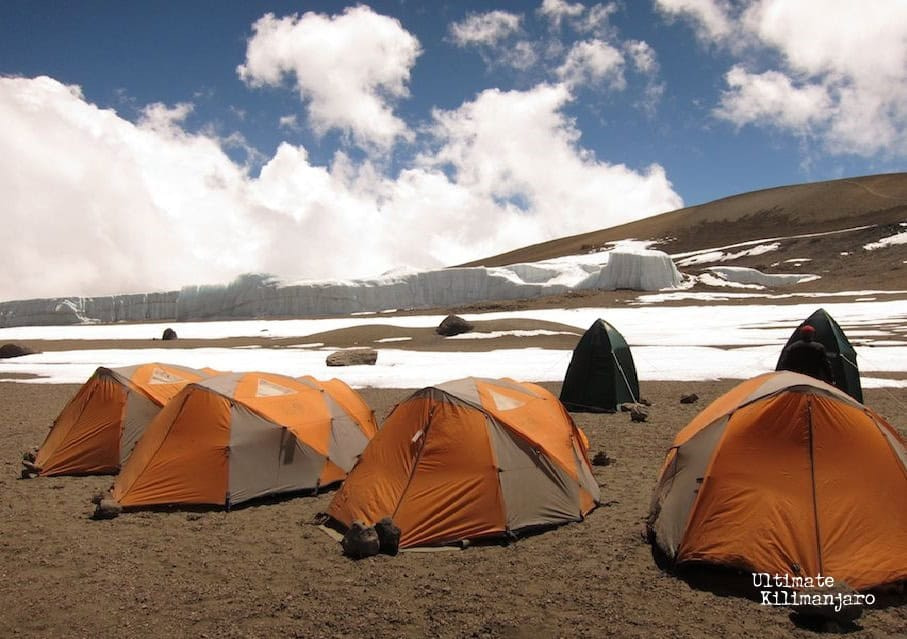
Just shy of the summit, there is a little used campsite known as Crater Camp (18,800 feet/5,750 m). It is called Crater Camp because it is a short distance from the source of Kilimanjaro herself, Reusch Crater (19,140 ft/5,800 m). Additionally, the campsite is next to one of Kilimanjaro’s last remaining glaciers, Furtwangler Glacier. Staying at Crater Camp gives climbers an opportunity to climb to the crater rim, and to get up close to the glaciers.
Crater Camp can be used the night before or preferably after a summit attempt. Ultimate Kilimanjaro® operates private climbs using Crater Camp on the 9 day Lemosho route and 10 day Northern Circuit route.
Mount Meru
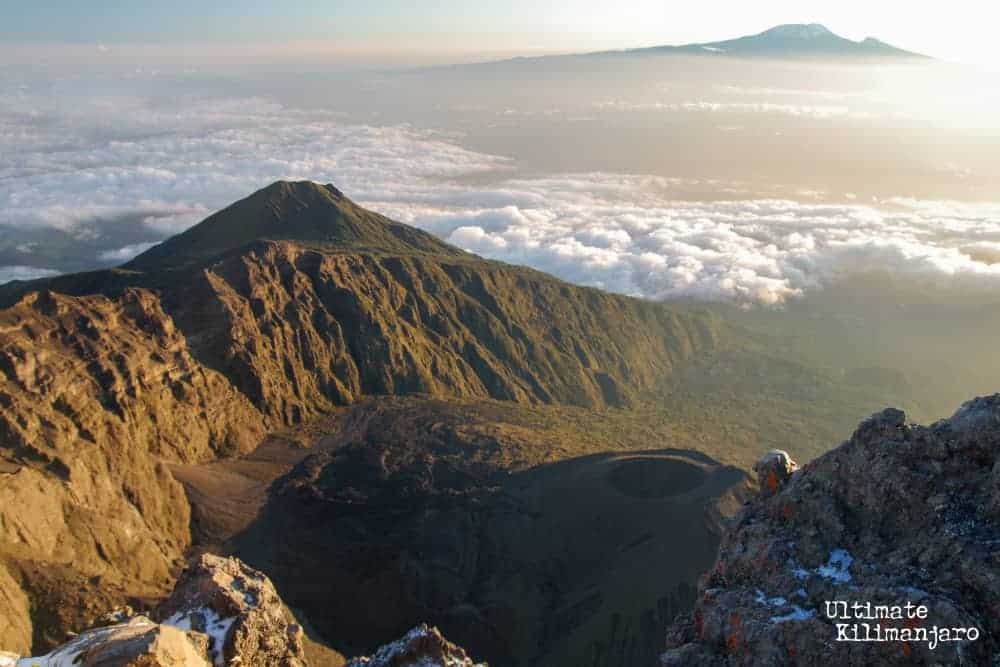
Mount Meru is a volcanic mountain that is often overshadowed by Mount Kilimanjaro. However, it is still a significant and beautiful peak in its own right. At 14,980 feet high, Mount Meru is the fifth-highest mountain in Africa. It is located in Arusha National Park and is approximately 43 miles (70 km) west of the city of Arusha.
The mountain is characterized by a horseshoe-shaped crater, which was formed during a past eruption. The highest point on the mountain is called “Socialist Peak” or “Summit,” and it offers nice views of the surrounding landscape, including Mount Kilimanjaro.
This trek typically takes about four to five days. Climbers use Mount Meru as an acclimatization climb before attempting the higher Kilimanjaro.
Kilimanjaro Routes Recap
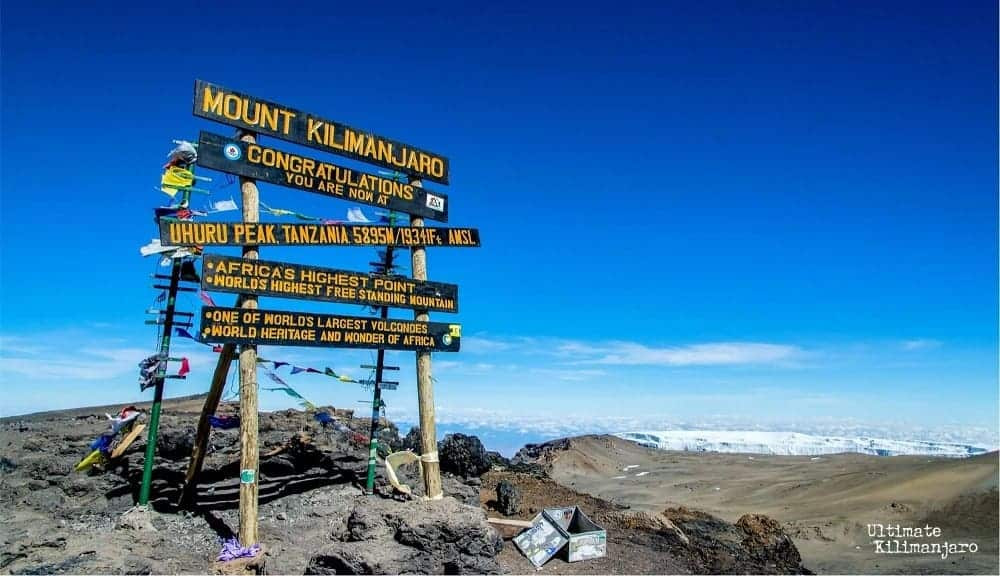
- There are seven established routes on Kilimanjaro.
- The best routes are the 8 day Lemosho Route, 8 day Northern Circuit, 9 day Northern Circuit and their daytime summit variations – 9 day Lemosho route (daytime summit), 9 day Northern Circuit (daytime summit), 10 day Northern Circuit (daytime summit).
- We also recommend the 8 day Northern Circuit, 7 day Rongai route and 7 day Machame route.
- We schedule group climbs on our favorite routes:
- We can arrange private climbs on all routes.
Recent Routes Blog Posts
- Does Kilimanjaro Require Technical Climbing?

- Mount Meru, Tanzania: Everything You Need to Know

- Barranco, Karanga & Barafu Camp: Kilimanjaro’s Southern Circuit Route
- Why People Fail When Climbing Kilimanjaro
- Is Mount Kilimanjaro Too Crowded?

- Why Do Climbers Summit Kilimanjaro at Night?
- Kilimanjaro Map & Climbing Route Selection

- What are the Most Dangerous Routes on Kilimanjaro?