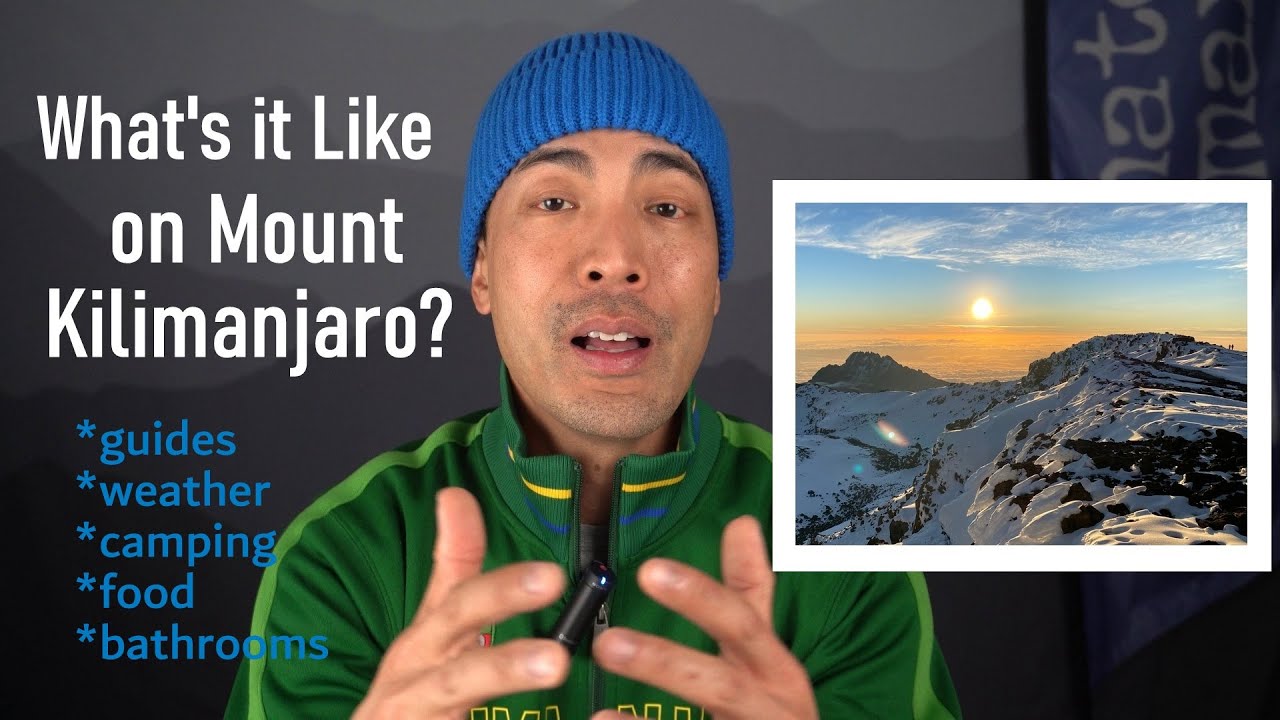
Climbing Kilimanjaro is a sizable decision (get it?) for most people. Unless you’re a regular backpacker or mountaineer, it’s not everyday that you’d embark on a trip to 19,341 feet in elevation in a remote, alpine environment for many days and nights. So naturally, people want to know what they’re going to experience on such a big trip.
In this article, we discuss what to expect on your Kilimanjaro expedition.
- Kilimanjaro Guides
- Kilimanjaro Weather
- Ecological Zones
- What You Carry
- Camping on Kilimanjaro
- Kilimanjaro Food
- Bathrooms on Kilimanjaro
- Daily Schedule
- Kilimanjaro Trail Conditions
- Hotels Before and After
Kilimanjaro Guides
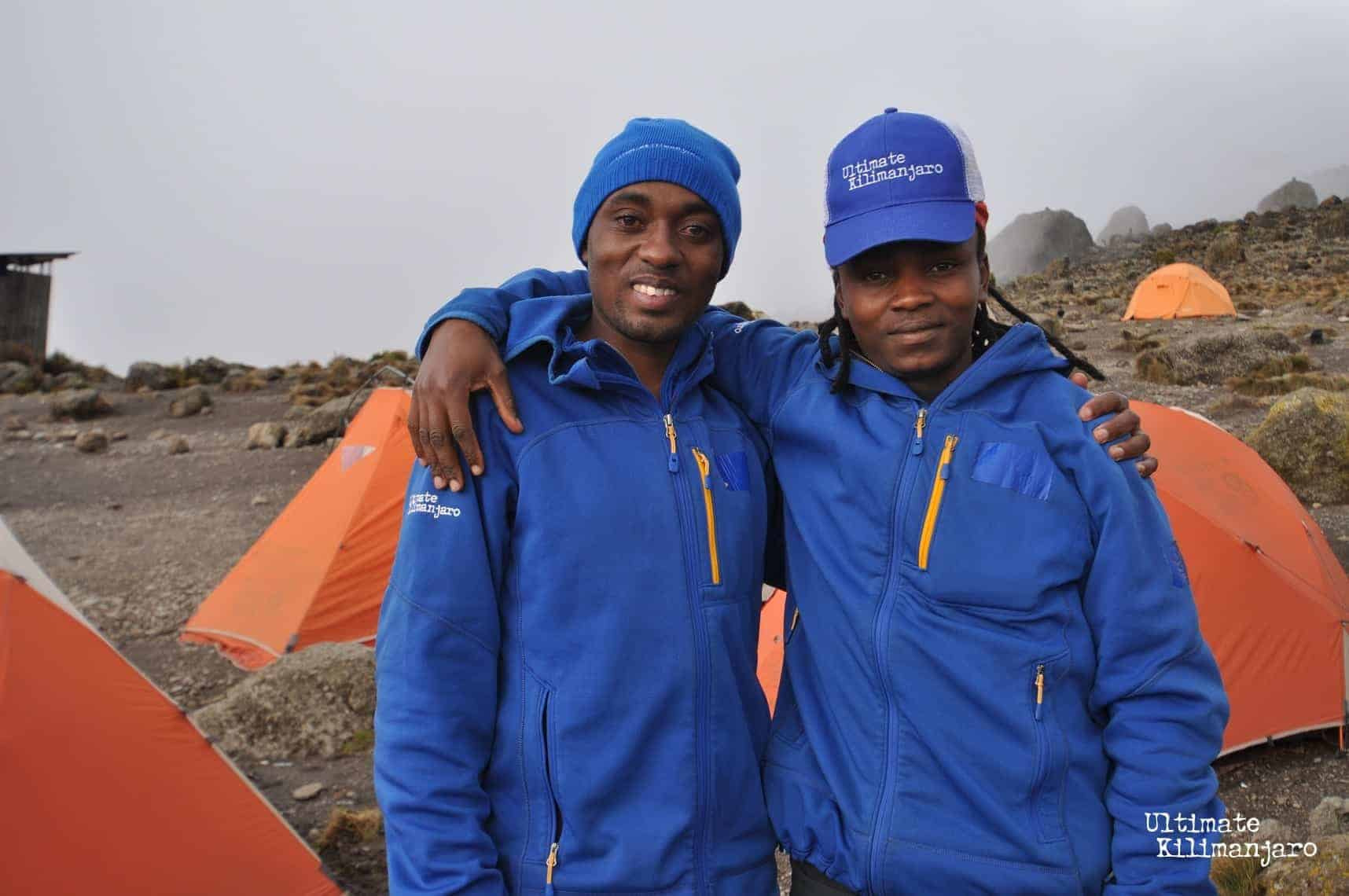
Your guide plays the most important role in your Kilimanjaro trek. The decisions the guide makes has a tremendous impact on your experience. How the climbing party is managed can determine your success, your health, and your enjoyment. So it’s imperative that you understand who you are climbing with.
First and foremost, your safety is our highest priority. All Ultimate Kilimanjaro® guides are certified Wilderness First Responders (WFR), the recognized industry standard for those who work as mountain guides. They can prevent, recognize and treat altitude-related illnesses, which are very common on Kilimanjaro. Furthermore, they are trained to make critical medical decisions, including the administration of first aid and conducting emergency evacuations.
Kilimanjaro Weather
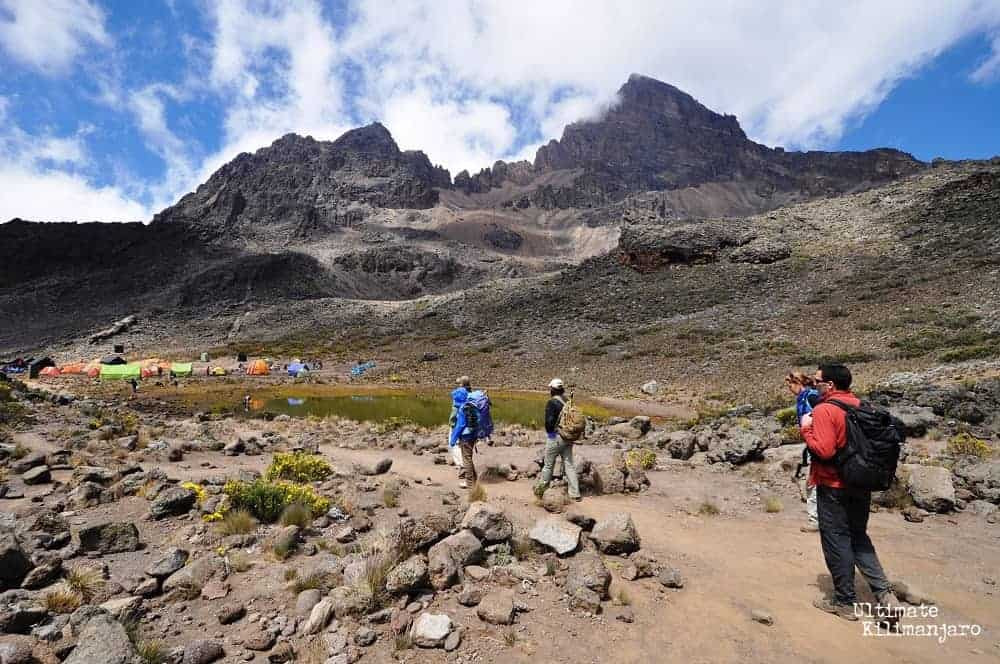
It can be hot and cold, sunny and cloudy, beautiful and foul… all in the same day.
The weather on Mount Kilimanjaro can vary dramatically from day to day, or even hour by hour.
The temperature mostly depends on the ecological zone, elevation, time of day and the season. Generally speaking, it will probably be warm at the trailhead when you begin your climb and very chilly at the top when you reach the summit.
Average temperatures in the rainforest hover around 70 to 80 degrees Fahrenheit (21 to 27 degrees Celsius, with high humidity. But even on the lower slopes, overnight temperatures can dip to into the 40s (4 degrees Celsius). That means you might be wearing your knit hat and down jacket on the very first night.
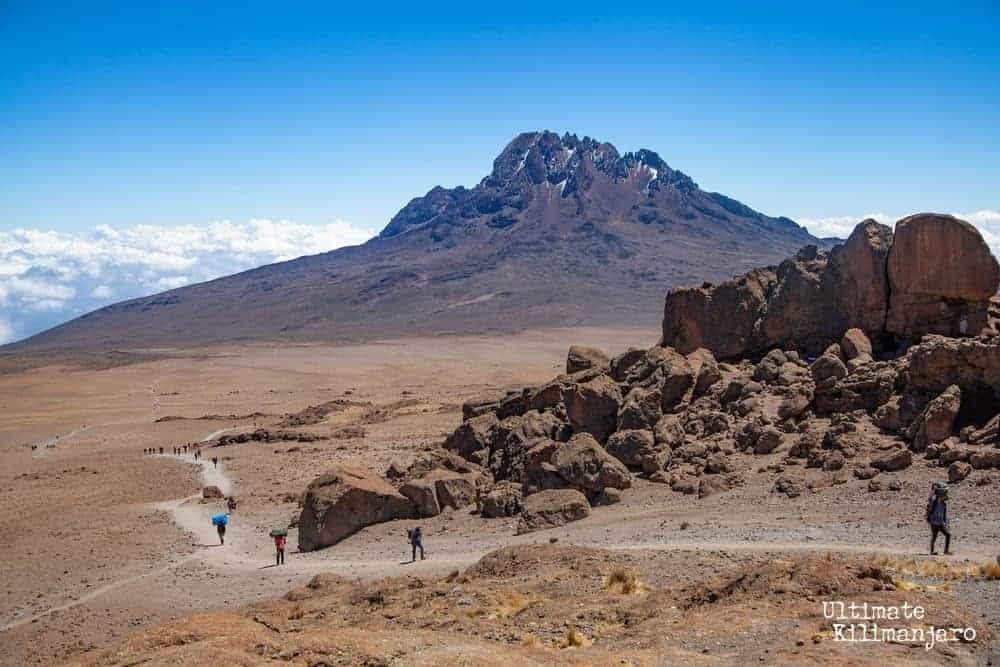
As you climb higher, it generally gets cooler and drier. However, as long as the sun is shining, hiking during the day is usually pleasant no matter what altitude you are at. You should always be prepared for Kilimanjaro’s unpredictable weather. Rain, wind and snow can strike at anytime. But with the right gear, you’ll be fine.
The coldest temperatures you will have to endure typically arise on the way to the summit, which occurs in the middle of the night. During this time and at this elevation, it can be a frigid +20 to -20 degrees Fahrenheit (-7 to -29 degrees Celsius). But once the sun comes up, it warms up quickly as people make their descent.
Ecological Zones
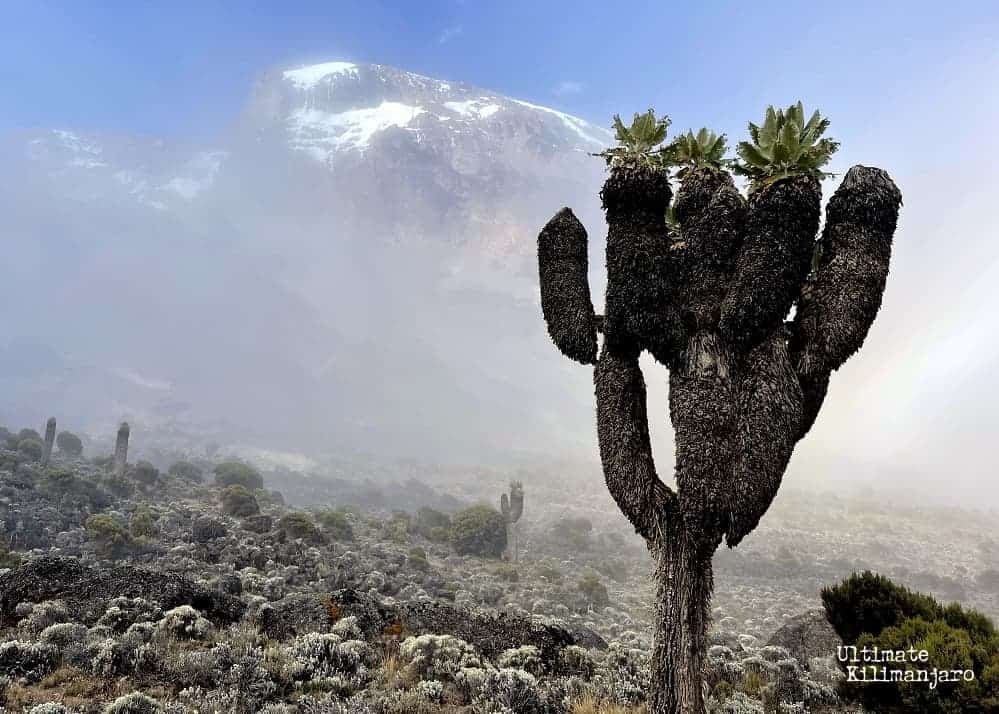
There are five ecological zones in the Kilimanjaro region – bushland, rainforest, heath/moorland, alpine desert, and arctic. You will experience all five zones during your expedition.
The bushland zone encompasses the areas around Moshi town, where native flora and human made agriculture occur. The routes usually start in the rainforest zone, which has warm, wet conditions and dense flora. The heath/moorland zone is a semi-alpine zone with lighter vegetation. The alpine desert zone has little plant or animal life, and is characterized by a stark, rocky landscape. The arctic zone is very cold, and glaciers and snow.
What You Carry
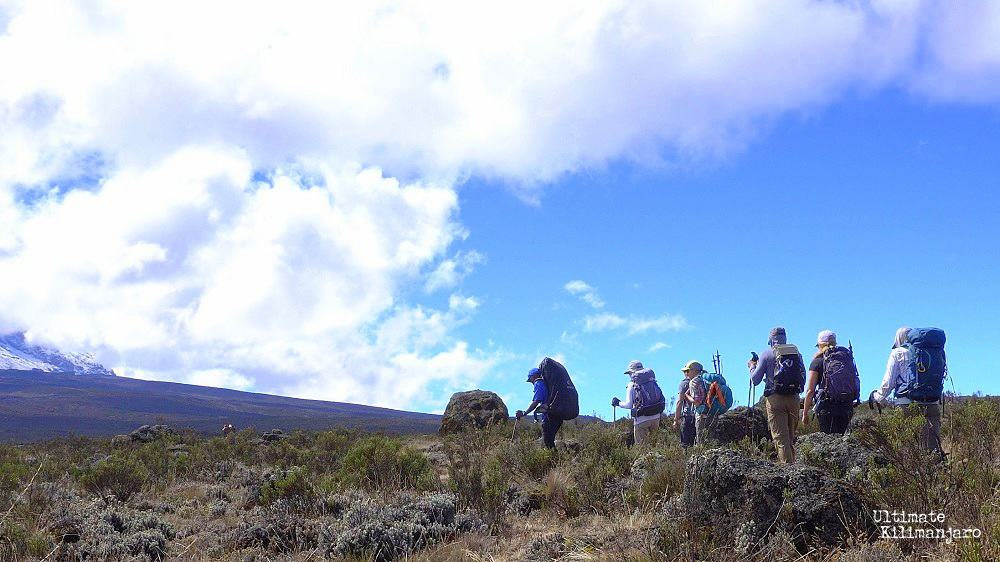
When you climb Kilimanjaro with us, you don’t have to carry a heavy pack.
Our climbs are fully supported. So our staff carries most of your gear (placed in a duffel bag), plus all the food and equipment necessary for the trip. You only need to carry a small daypack weighing perhaps 5 kgs (11 lbs.) with the things you might need while you make your way to camp. This includes things such as extra clothing, snacks and water.
You never have to worry about being weighed down or lumbering around with a big, bulky pack. Just enjoy the hike and let our crew handle the rest. Your duffel bag will be transported between campsites everyday, and waiting for you in your tent when you arrive.
Camping on Kilimanjaro
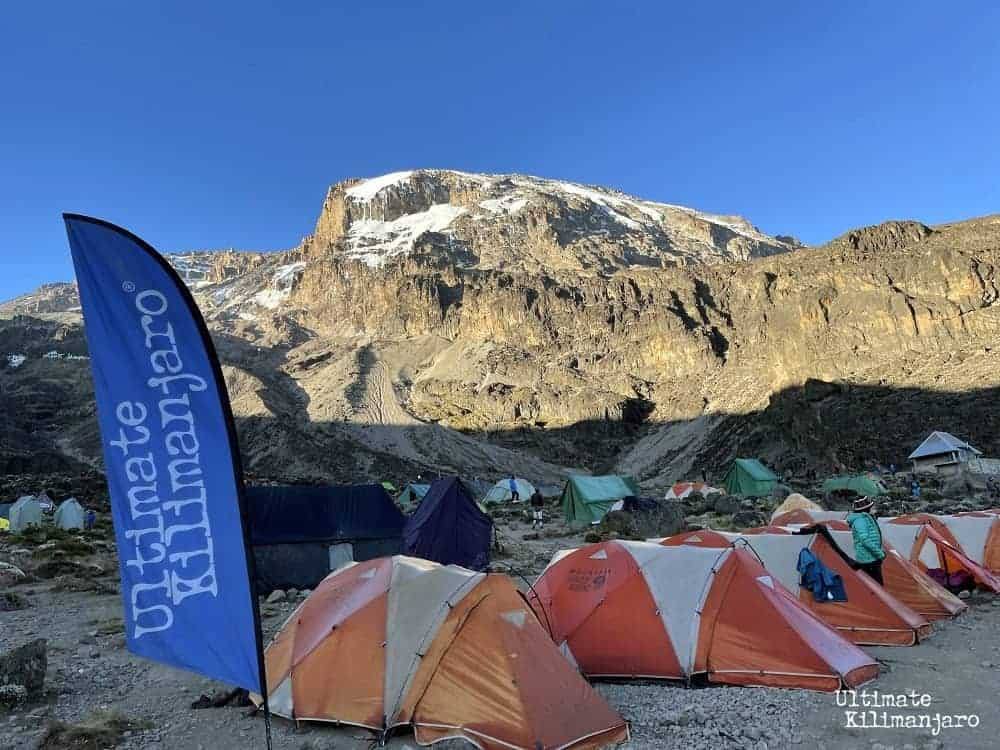
Nearly all of the routes on Mount Kilimanjaro require camping. In other words, you’ll be sleeping in a tent.
Each route has designated campsites that must be used. Dispersed camping, or camping outside designated areas, is not allowed.
We understand that not everyone is accustomed to sleeping outdoors and therefore may have reservations about camping on Kilimanjaro. However, we try to make sleeping on the mountain as cozy as possible for all of our guests, whether they love camping or have never done it.
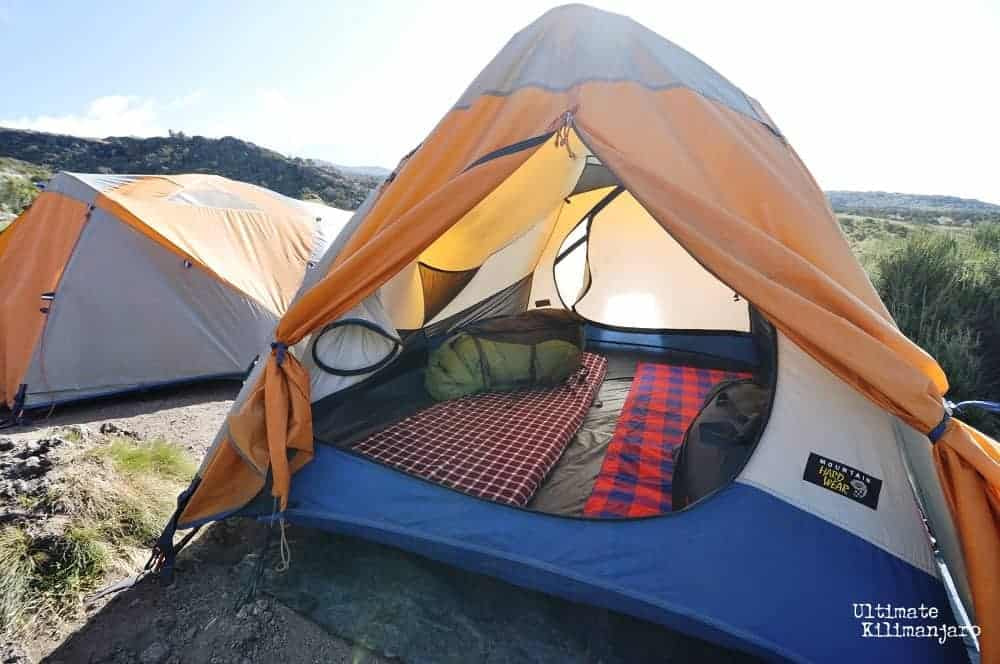
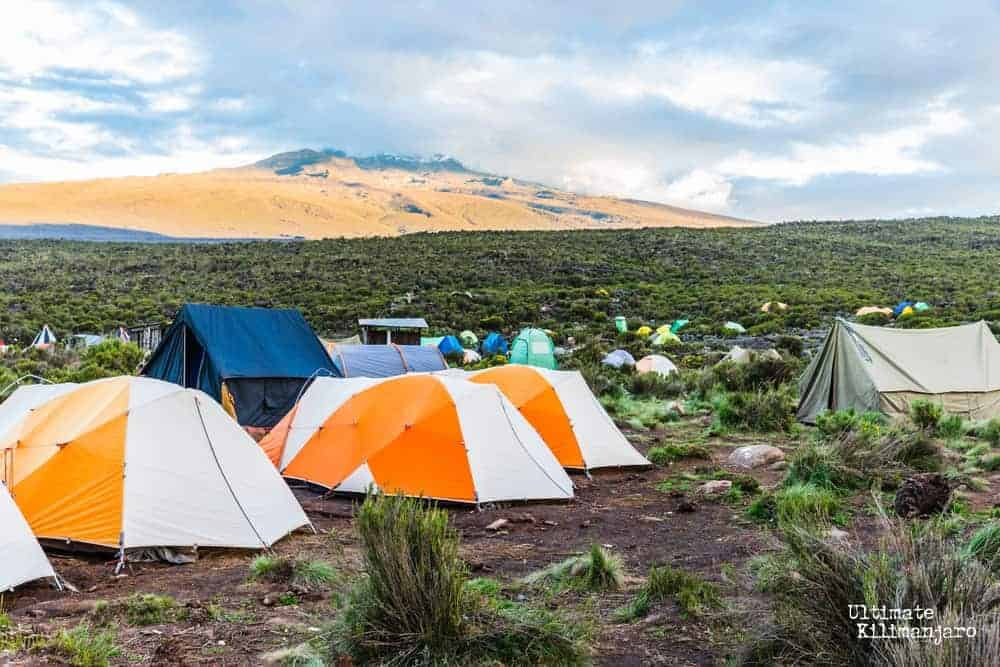
First, we supply foam sleeping mats, which provide enough cushioning and insulation for comfort and warmth. Next, we have ultra-warm sleeping bags for rent that are rated down to -30 degrees Fahrenheit (-34 degrees Celsius). And finally, we provide sturdy, four-season mountain tents that are designed for harsh alpine conditions. Together, these components will protect you from the elements so you can stay warm, dry and relaxed while sleeping on Kilimanjaro.
Our staff carries the tents, sleeping bags and sleeping pads. We also set them up and break them down for you at every campsite.
Kilimanjaro Food

The food we serve on Kilimanjaro is absolutely delicious, nutritious and calorie dense.
All food, including breakfast, lunch, dinner, and snacks, are provided on the mountain. A dedicated chef who is trained in cooking western cuisine prepares hot meals for you every day. These meals are created with fresh, local ingredients.
Beef, chicken, fish and beans comprise the protein sources while rice, pasta, bread, and potatoes supply the heavy carb requirements. Additionally, soup, hot drinks, and fruit are available with every meal. You will eat well on our trips.
Meals are eaten as a group in a mess tent, complete with tables, chairs, dinnerware and silverware. On occasion, meals are eaten without the mess tent when the weather is nice.
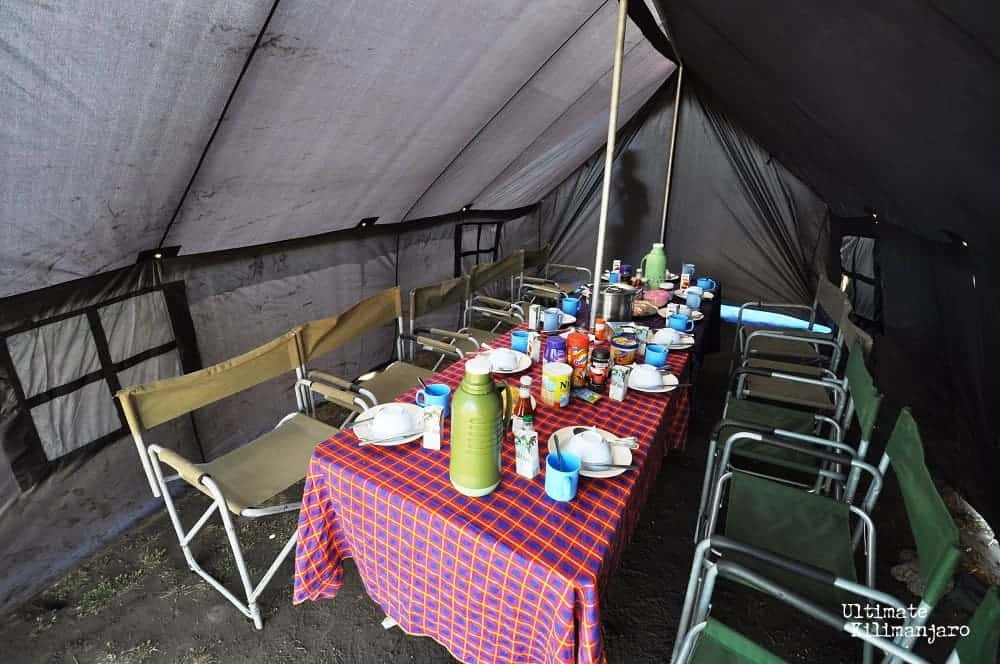
Serving varied and tasty food keeps our clients nourished, which is an important component of success when they are regularly expending loads of energy.
Bathrooms on Kilimanjaro
If you need to use the bathroom while hiking between camps, then the mountain is your bathroom. Simply find a relatively discrete place and go. The best spots are usually out of sight and away from the main trail.
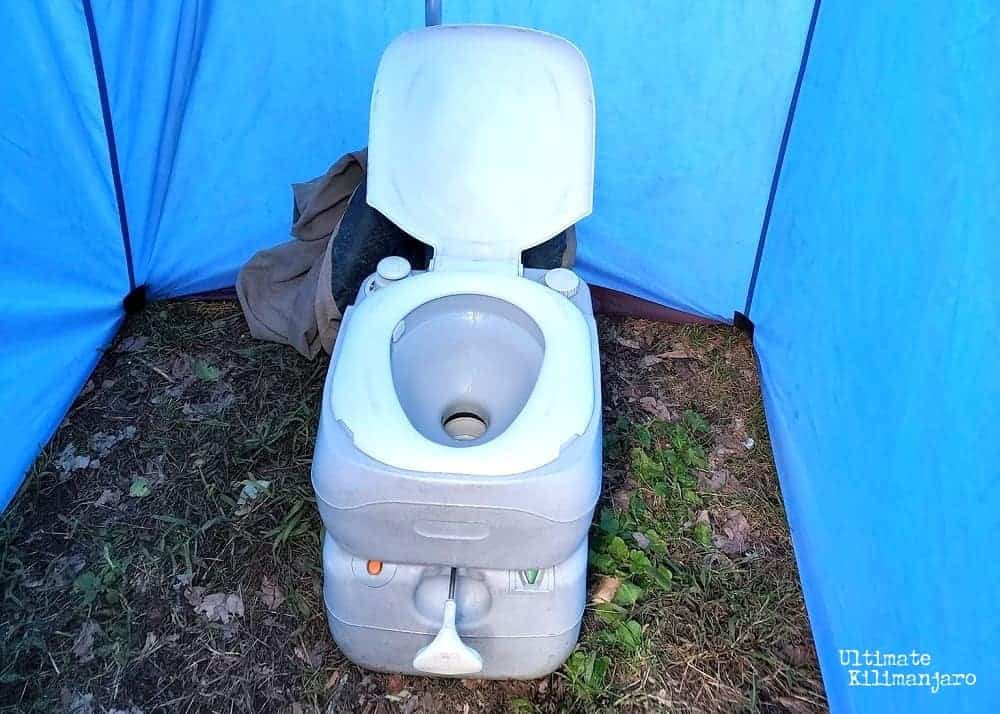
At the campsites, we set up private toilet tents for our clients.
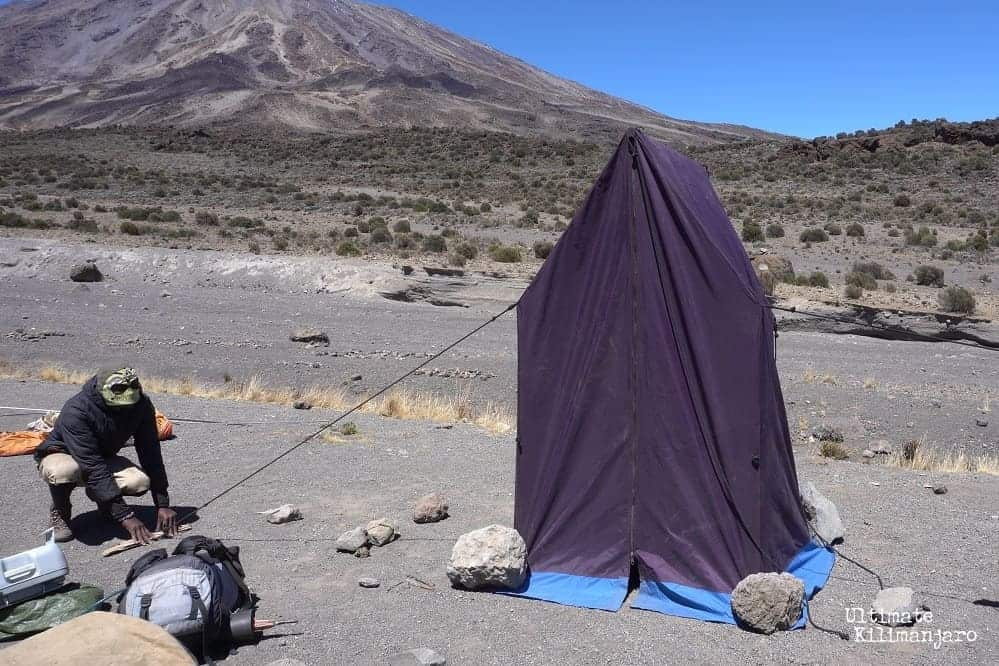
A toilet tent is a private, stand-up sized tent with a zippered opening. Inside is a plastic commode that is regularly cleaned and emptied by one of the porters. By providing this hygienic, convenient and comfortable alternative, you’ll be thankful that you don’t have to poop outside or use the filthy public toilet facilities on the mountain.
Daily Schedule
You will quickly get used to the daily schedule on Mount Kilimanjaro.
The days start with an early morning “wakeup call” (a porter knocking on your tent) followed by a hearty breakfast. We hit the trail around 8AM and hike between four to six hours on a normal day. Some days are shorter and some days, especially summit day, are much longer. On shorter days, you’ll arrive at camp around midday or early afternoon and have lunch there. On longer days, you’ll have a hot lunch somewhere en route and continue to camp afterwards.
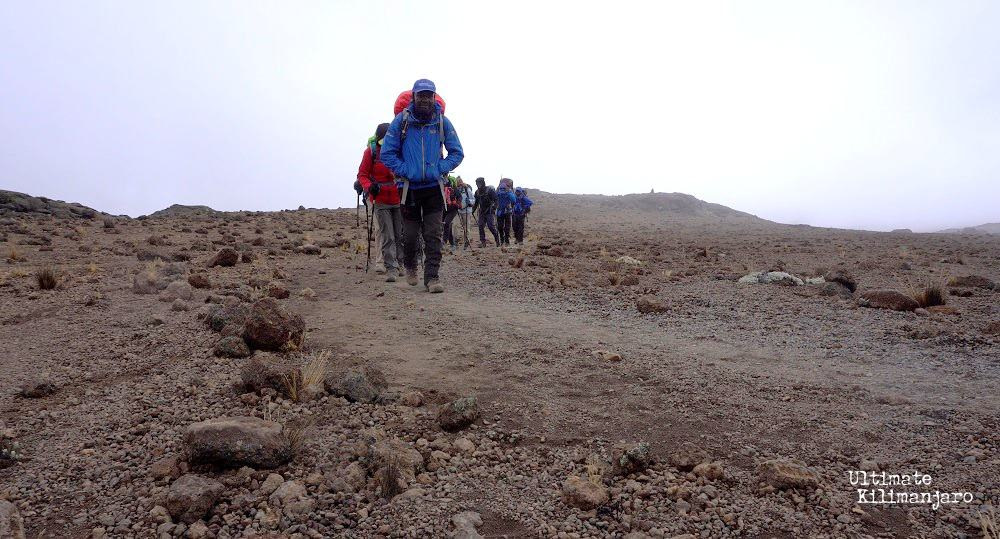
Once at camp, you’ll have some downtime to do as you like. Additional acclimatization hikes may be offered depending on the route. Dinner usually occurs around 6PM and most people retire to their tents between 8PM and 9PM.
Note that the schedule for summit day is completely different.
Kilimanjaro Trail Conditions
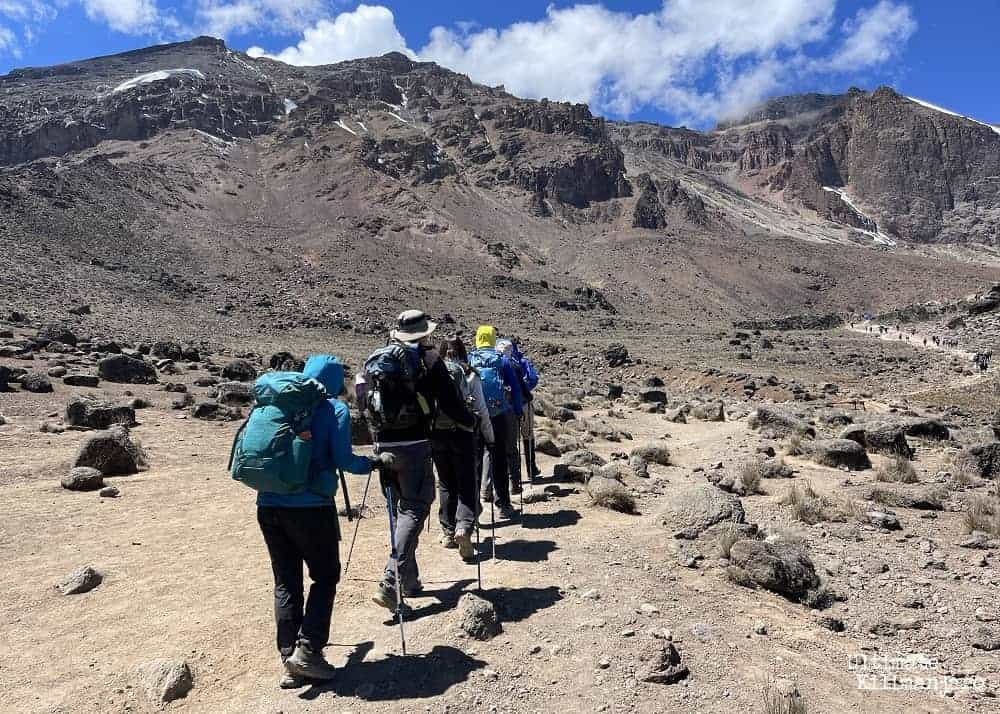
The terrain you will encounter on Kilimanjaro changes from bottom to top, determined mainly by the weather and ecological zones. Ecological zones are geographically defined areas on the mountain which have certain characteristics involving plants, animals, precipitation, temperature and more.
Mount Kilimanjaro is home to four ecological zones.
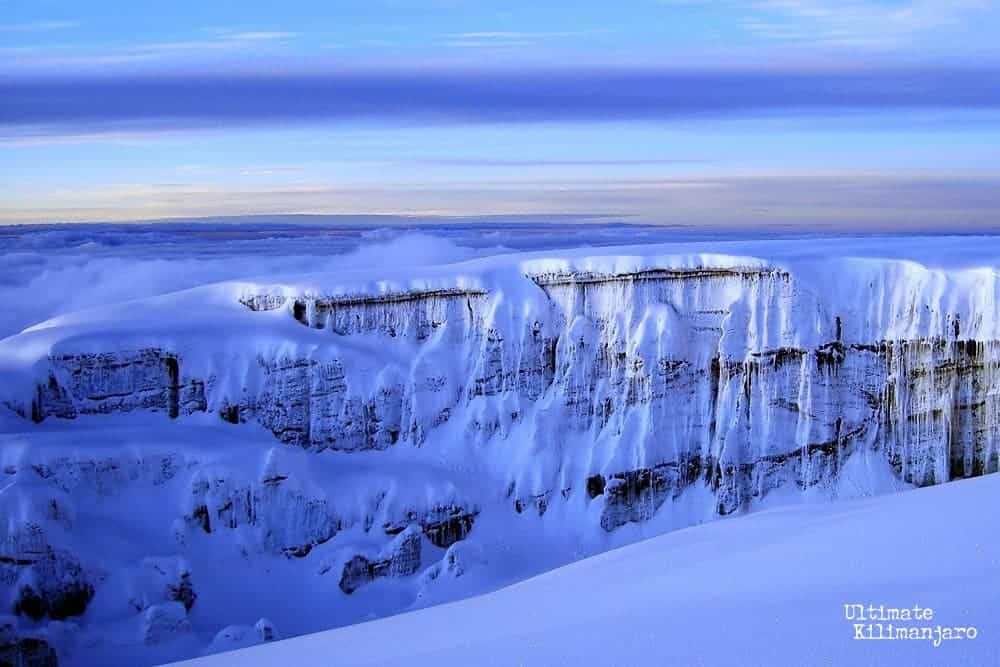
At the base of the mountain, the path runs through the montane rainforest where the trail consists mostly of dirt and mud. Higher up, into the moorland and alpine desert ecological zones, the trail becomes dry and dusty, but the earth is solid and secure. As you approach the summit, the substrate turns into loose gravel, or scree, until you reach the crater rim. You may trek through light snow as well.
Hotels Before and After
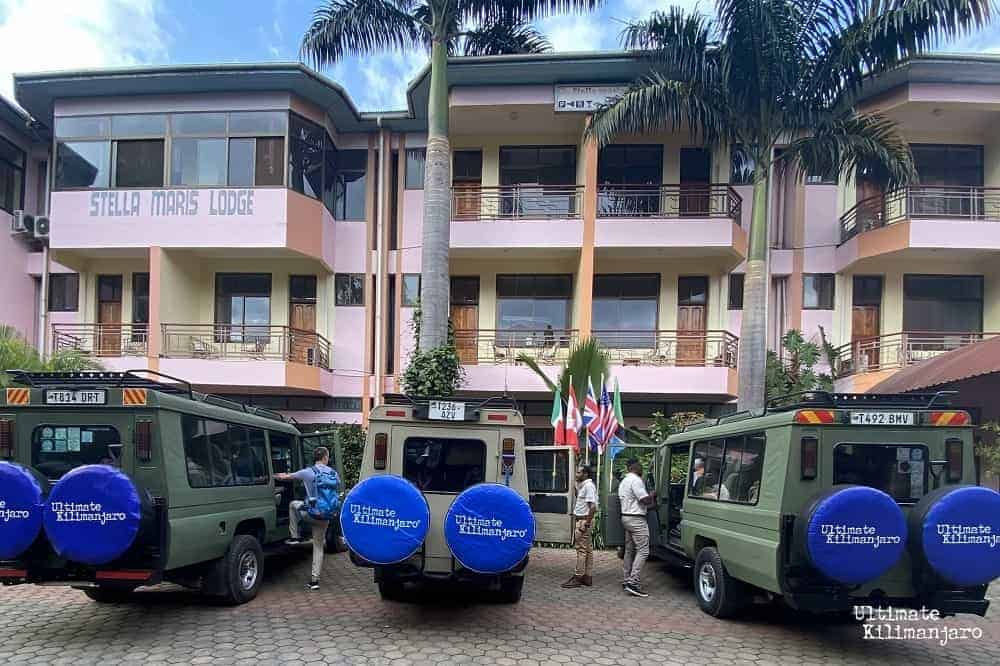
Our climbs include overnight accommodations in Moshi on the day preceding and the day following the climb. Therefore, if you arrive the day before the climb begins and leave the day after the climb ends, you will not need to book any extra hotel rooms.
We can arrange for pick up and drop off at Kilimanjaro airport at your request.
On the Mountain Recap
- Temperatures range from warm to extremely cold.
- You only carry a small daypack.
- You sleep in tents at designated campsites.
- Hot meals are provided throughout the climb.
- Private toilet tents serve as bathrooms.
- Most dayhikes consist of four to six hours of walking.
- Terrain will vary depending on the weather and ecological zone.
- Hotel accommodations before and after the climb are included.
Recent Mountain Blog Posts
- Why Summit Night on Kilimanjaro Feels Like a Dream

- How to Stay Warm on the Summit of Kilimanjaro

- Summit Night: 10 More Tips to Reach the Top
- What Happens to the Human Body on Mount Kilimanjaro?
- Climbing Kilimanjaro: What’s it Like?

- Kilimanjaro Summit Night: 10 Tips for Success
- How Hard is it to Climb Kilimanjaro?
- Walk-In Tents: Wrong For Kilimanjaro