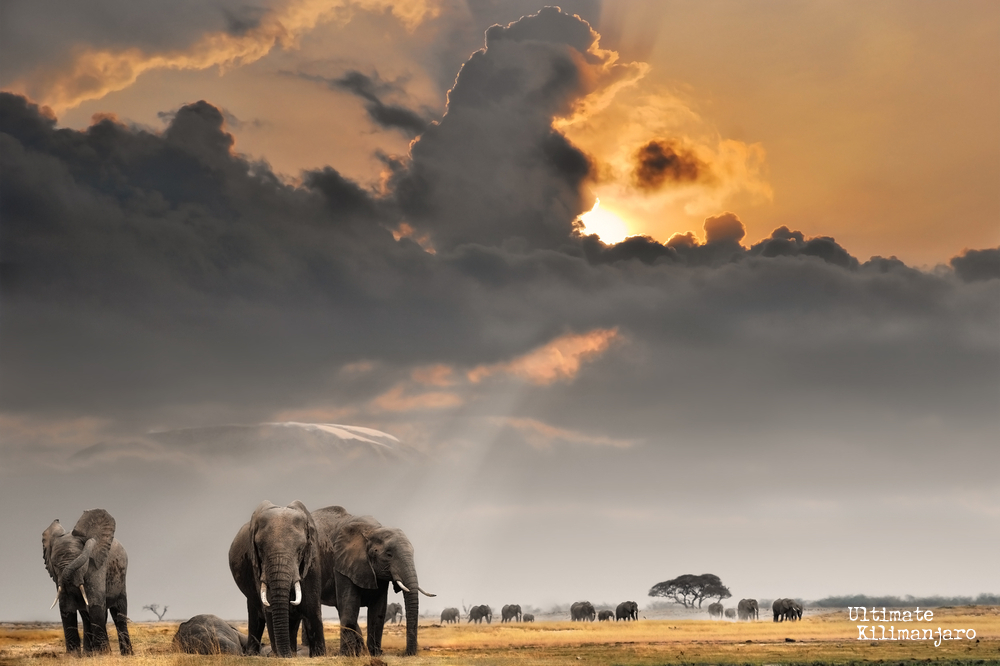
Tanzania supports one of the largest concentrations of large mammals on Earth.
More than four million animals inhabit the country’s ecosystems, representing roughly 430 species and subspecies. An estimated 20% of Africa’s large mammal population resides within Tanzania’s borders, a reflection of the country’s vast protected areas and relatively intact habitats.
The Big Five safari animals – lions, leopards, elephants, buffalo, and rhino – can all be found in Tanzania. These species remain the most sought after sightings for many first time safari visitors.
Predator populations are particularly strong. Tanzania is widely recognized for its high density of carnivores. Sightings of big cats (lions, leopards, cheetahs) are common. Some might even get to witness these felines stalk, chase and catch their prey. Other predators include hyenas, crocodiles, honey badgers, mongooses, servals, and several species of jackal and fox.
On game drives, visitors are often struck by the sheer concentration of large mammals across Tanzania’s parks and conservation areas. Encounters with elephants, giraffes, zebras, antelopes, impalas, gazelles, kudus, topis, hartebeests, elands, bushbucks, warthogs, and hippos are a routine part of the experience.
Tanzania’s primate populations add another layer of diversity. Sightings commonly include baboons, vervet monkeys, colobus monkeys, and blue monkeys, each adapted to distinct ecological niches within the region.
African elephantMasai giraffePlain zebraThompson gazelleCommon warthog River hippopotamusOlive baboonCommon ostrich
Birdlife is equally impressive. Tanzania hosts more than 1,000 bird species, ranging from large terrestrial birds such as ostrich to raptors, waterbirds, and migratory species. Guests frequently observe starlings, cranes, storks, owls, falcons, ducks, weavers, avocets, shags, herons, oxpeckers, kingfishers, rollers, vultures, sandpipers, and eagles.
The density and variety of animal life are among the defining characteristics of a Tanzanian safari. Even short game drives can produce a continuous sequence of wildlife observations.
In consideration of the services provided by Ultimate Kilimanjaro®, its shareholders, directors, officers, employees, agents, volunteers, participants and all other persons or entities associated with or acting in any capacity on its behalf (collectively referred to as “Ultimate Kilimanjaro®”), I hereby agree to release, indemnify, and discharge Ultimate Kilimanjaro®, on behalf of myself, my heirs, personal representative and estate and for all members of my family, including minor children, as follows:
1. I am aware that, during the trip or activity, I may be subjecting myself to dangers and hazards that could result in physical or emotional trauma, illness, injury, paralysis, death, or damage to myself, property, and/or third parties. I acknowledge that high-altitude mountain hiking entails known and unanticipated risks, including but not limited to: hazards of traveling in uneven mountainous terrain; slips and falls; being struck by rockfall, icefall, or other objects dislodged or thrown from above; forces of nature, including lightning and weather changes; the risk of falling from rocks or mountainsides; exposure to insect bites or animal attacks; altitude- and cold-related conditions including hypothermia, frostbite, acute mountain sickness, high-altitude cerebral edema, and high-altitude pulmonary edema; my own physical condition; and the physical exertion associated with this activity. Additional dangers may include travel in remote areas with limited infrastructure and medical services; risks associated with viewing wild animals; accidents or illness in remote places without access to emergency medical facilities; war; terrorism; and other disruptive forces. I understand that this description of risks is not complete and that other unanticipated inherent risks may occur. I recognize that such risks, dangers, and hazards may be present at any time during the trip. I also acknowledge that medical services or facilities may not be readily available or accessible during some or all of the time in which I am participating in the trip.
2. I expressly agree to accept and assume all of the risks, both known and unknown, associated with this activity. I acknowledge that my participation is entirely voluntary, and I elect to participate in spite of these risks.
3. I hereby voluntarily release, forever discharge, and agree to indemnify and hold harmless Ultimate Kilimanjaro® from any and all claims, demands, or causes of action arising out of or related to my participation in this activity, including, but not limited to, claims alleging negligent acts or omissions.
4. Should Ultimate Kilimanjaro®, or anyone acting on their behalf, incur attorney’s fees or costs to enforce this Agreement, I agree to reimburse them for all such fees and costs.
5. This Agreement shall be governed by the laws of the State of Wyoming. Any legal action arising out of or relating to this Agreement, or my participation in this trip, shall be brought exclusively in the courts of the State of Wyoming. I further waive my right to a trial by jury in any such action.
6. I certify that I am physically and medically fit to participate on this trip. I understand that my resting pulse rate must be below 100 before beginning the trek. My pulse will be checked prior to departure, and if it exceeds 100, I will be required to obtain additional medical clearance before being permitted to start the trek. I acknowledge that failure to provide such clearance will result in denial of participation without refund.
7. I agree to obtain and maintain the required travel insurance to cover any injury, illness, or damage I may cause or suffer while participating in this trip. I agree to be fully responsible for all costs arising from such injury, illness, or damage. I further acknowledge and accept the risks associated with any medical or physical conditions I may have.
8. I understand that Ultimate Kilimanjaro® contracts with independent contractors to provide services on the trip or activity, including transportation, accommodations, and guiding. I acknowledge that Ultimate Kilimanjaro® has no control over, and accepts no responsibility for, the acts, omissions, or defaults of any contractor involved in providing such services. Ultimate Kilimanjaro® shall not be liable for any injury, damage, loss, delay, or irregularity arising from any cause, including but not limited to: vehicle defects; the acts or defaults of carriers or service providers; acts of God; detention, quarantine, or government restrictions; terrorism, war, strikes, or civil disturbances; theft; force majeure; accidents involving aircraft, boats, bicycles, motor vehicles, or other transport; or failures, delays, or changes in transit, accommodations, restaurants, or camping services.
By agreeing to this document, I acknowledge that I may be found by a court of law to have waived my right to maintain a lawsuit against Ultimate Kilimanjaro® for any claim released herein. I further understand and agree that any such legal action must be filed only in the State of Wyoming, and I waive my right to a trial by jury. I have had sufficient opportunity to read this entire document. If any part of this Agreement is deemed unenforceable, all the remaining parts shall remain in full force and effect. I have read and understand it, and I agree to be bound by its terms.
Terms & Conditions
Last Updated: October 2026
Please read these Terms and Conditions carefully before booking a private or group climb and/or safari with Ultimate Kilimanjaro®.
1. Company Information
Ultimate Kilimanjaro® specializes in the organization of mountain climbs and wildlife safaris in Tanzania.
Business Address: Ultimate Kilimanjaro® 1930 Village Center Circle, Suite 3-5700 Las Vegas, NV 89134 Phone: (702) 570-4970 Fax: (702) 570-4985
2. When These Terms Apply
These Terms apply to all bookings made directly with Ultimate Kilimanjaro®. By booking a trip, you acknowledge that you have read, understood, and agreed to these Terms and Conditions. These Terms govern your rights and responsibilities when booking and participating in a climb or safari in Tanzania. These Terms, together with the Waiver (Acknowledgment & Assumption of Risk, Release and Indemnification), confirmed booking details, and any subsequent changes approved by Ultimate Kilimanjaro®, constitute the entire agreement between Ultimate Kilimanjaro® and the participant and supersede any prior understandings or communications.
3. Our Responsibilities
Ultimate Kilimanjaro® ensures that all guides and staff are professionally trained, that required permits are obtained, and that all operations follow ethical and environmentally responsible practices. We act with reasonable skill and care in arranging your travel experience. While Ultimate Kilimanjaro® uses reasonable skill and care, we do not guarantee specific outcomes, such as reaching the summit or viewing particular wildlife.
4. Deposit and Balance Payment
A deposit is due at the time of booking. The remaining balance is due 60 days prior to arrival. Bookings made within 60 days of the arrival date require full payment at the time of booking.
Failure to make payment on time may result in cancellation of your booking and forfeiture of all payments made. Prices may increase to reflect changes in park fees or taxes.
Payments are processed in U.S. dollars (USD). Clients are responsible for all bank fees, currency conversion charges, or transfer costs.
5. Refunds, Cancellations, and No Shows
Deposits are non-refundable unless Ultimate Kilimanjaro® cannot confirm your booking.
Cancellations must be submitted in writing. Refunds are processed as follows:
61+ days before trip: 70% refund of total trip cost
31–60 days before trip: 20% refund for safari costs, 50% refund for other trip costs
0–30 days before trip: No refund
No refunds are issued for early departures or unused services. Refund decisions are final and not subject to reversal through credit card chargebacks or payment disputes. Travel insurance is required to protect against financial loss.
6. Travel Insurance
Valid travel and medical insurance is required for all participants. Insurance must cover high-altitude trekking, medical and repatriation costs, trip cancellation, and emergency evacuation. Ultimate Kilimanjaro® reserves the right to deny participation to any traveler who fails to provide proof of adequate insurance coverage upon request.
7. Booking on Behalf of Others
If booking on behalf of others (as a group leader or organizer), you are responsible for providing accurate booking information, coordinating the group’s itinerary, and assisting Ultimate Kilimanjaro® in ensuring all participants complete their required forms and sign the Waiver. Each participant is responsible for completing their own documentation and making their payments unless otherwise arranged.
8. Travel Documents and Entry Requirements
Clients are responsible for ensuring they have valid passports, visas, and vaccinations as required for entry into Tanzania. No refunds will be issued for failure to obtain required travel documents or for entry denials at ports of entry. Ultimate Kilimanjaro® is not liable for costs resulting from missing or invalid documentation.
9. Accommodation and Meals
Accommodations are based on double occupancy unless otherwise arranged. Single supplements are available at additional cost. All tents on Kilimanjaro are shared (two per tent) unless a private tent is requested in advance. Special dietary requests must be submitted at least 30 days prior to departure.
10. Fitness and Medical Requirements
All clients must be in good physical condition. Resting pulse rate must be below 100 prior to starting the climb. If your pulse exceeds 100, you must obtain medical clearance before beginning. Clients must truthfully complete all required medical forms and disclose any preexisting conditions prior to travel. Failure to provide truthful medical information may result in denial of participation without refund.
11. Changes to Itinerary
Trip dates are firm and cannot be changed. Other amendments (such as rental gear, hotel accommodations, or transfers) made within 60 days prior to arrival are at Ultimate Kilimanjaro®’s discretion and subject to a service fee. Ultimate Kilimanjaro® reserves the right to alter itineraries due to weather, safety, or other force majeure circumstances without liability.
12. Authority of Guides
Guides have full authority during the climb or safari. Their instructions must be followed at all times for safety and operational reasons. Failure to comply may result in removal from the trip at the participant’s expense, without refund.
13. Risks and Assumption of Risk
Mountain climbing and safaris involve inherent risks, including illness, injury, paralysis, death, and property damage. These risks include, but are not limited to, altitude sickness, difficult terrain, slips and falls, rockfall, adverse weather, extreme temperatures, physical exertion, wildlife encounters, and limited access to medical facilities. Additional travel risks include motor vehicle accidents, infectious diseases, crime, theft, political unrest, terrorism, and transportation disruptions. Clients acknowledge and voluntarily assume these risks, both known and unknown, as further described in the Waiver.
14. Equipment and Gear Rental
Rental equipment is available at an additional cost from independent third-party outfitters in Tanzania. Clients are responsible for loss or damage to rental gear. Ultimate Kilimanjaro® is not liable for equipment quality or fit issues from third-party providers. Personal gear should be checked before departure to ensure suitability for your climb or safari.
15. Luggage and Valuables
Ultimate Kilimanjaro® is not responsible for lost, delayed, or damaged luggage handled by airlines or third parties. Do not pack valuables in checked luggage. Valuables may be stored in company safes in Tanzania at your own risk. Ultimate Kilimanjaro® accepts no responsibility for loss or damage to valuables left in hotel rooms, vehicles, or storage areas, whether or not company staff are present.
16. Financial Responsibility for Personal Expenses
Clients are responsible for personal expenses not included in the package (e.g., drinks, souvenirs, tips, or extra meals). Ultimate Kilimanjaro® is not responsible for covering any incidental costs incurred during your trip.
17. Vaccinations and Health
Clients are responsible for obtaining recommended vaccinations and consulting their physician regarding travel health. Certain vaccinations may be required for entry into Tanzania. Ultimate Kilimanjaro® provides non-medical guidance only and is not liable for medical decisions or outcomes.
18. Subcontractors and Local Suppliers
Ultimate Kilimanjaro® works with licensed and reputable local operators and independent contractors in Tanzania to provide services such as guiding, transportation, accommodations, and logistics. While these partners are carefully selected, they operate independently and are not employees or agents of Ultimate Kilimanjaro®.
Ultimate Kilimanjaro® is not responsible for any acts, omissions, negligence, or defaults of these third-party providers, nor for injury, loss, damage, delay, or irregularity arising from their actions or from causes beyond our control (including vehicle defects, accidents, natural events, government restrictions, or service changes).
By booking, you acknowledge that your climb or safari involves multiple service providers and that Ultimate Kilimanjaro® acts solely as a coordinator on your behalf.
19. Force Majeure
Ultimate Kilimanjaro® shall not be held liable for delays, cancellations, or losses caused by events beyond its control, including but not limited to natural disasters, strikes, wars, civil unrest, government actions, pandemics, or other force majeure circumstances.
20. Photography and Marketing
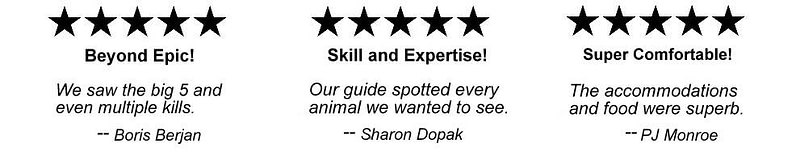
Photographs or videos taken during trips may be used for marketing purposes by Ultimate Kilimanjaro®. If you do not wish to appear in such materials, please inform your guide before the trip begins. Testimonials or reviews submitted voluntarily may be published on our website or in marketing materials.
21. Minors
Ultimate Kilimanjaro® may collect personal information about minors when necessary to arrange and operate trips. Parents or legal guardians must provide or authorize the collection of this information and complete any required forms, and sign the Waiver on behalf of their minor children. The minimum age for Kilimanjaro climbs is 10 years, subject to park approval. Minors under 18 must be accompanied by a guardian at all times and must participate in a private climb.
22. Release of Liability
Clients agree to release, indemnify, and hold harmless Ultimate Kilimanjaro® from any and all claims, demands, or causes of action arising out of or related to their participation in the trip, including claims alleging negligent acts or omissions, as further described in the Waiver.
23. Liability and Damages
Ultimate Kilimanjaro® is not liable for the acts of third-party service providers, flight delays, lost luggage, or injury due to conditions beyond our control. Clients are responsible for any damage to company property or rental gear caused by negligence or misuse.
24. Governing Law and Jurisdiction
These Terms and Conditions are governed by and construed in accordance with the laws of the State of Wyoming, USA, without regard to its conflict-of-law principles. Any disputes arising from these Terms or your participation in a trip shall be resolved exclusively in the courts of Wyoming, USA.