
The best time to climb Kilimanjaro is during the dry season – from December to mid March, and from late June to October. The best months are January, February, July, August, September and October.
Wet and Dry Seasons on Kilimanjaro
Due to Mount Kilimanjaro’s proximity to the equator, this region does not experience the extremes of winter and summer weather, but rather dry and wet seasons. Therefore, the best time to climb Kilimanjaro tends to be the warmest and driest months (see Kilimanjaro weather).
The table below lists the relative temperature, precipitation, cloudiness and crowds during the calendar months.
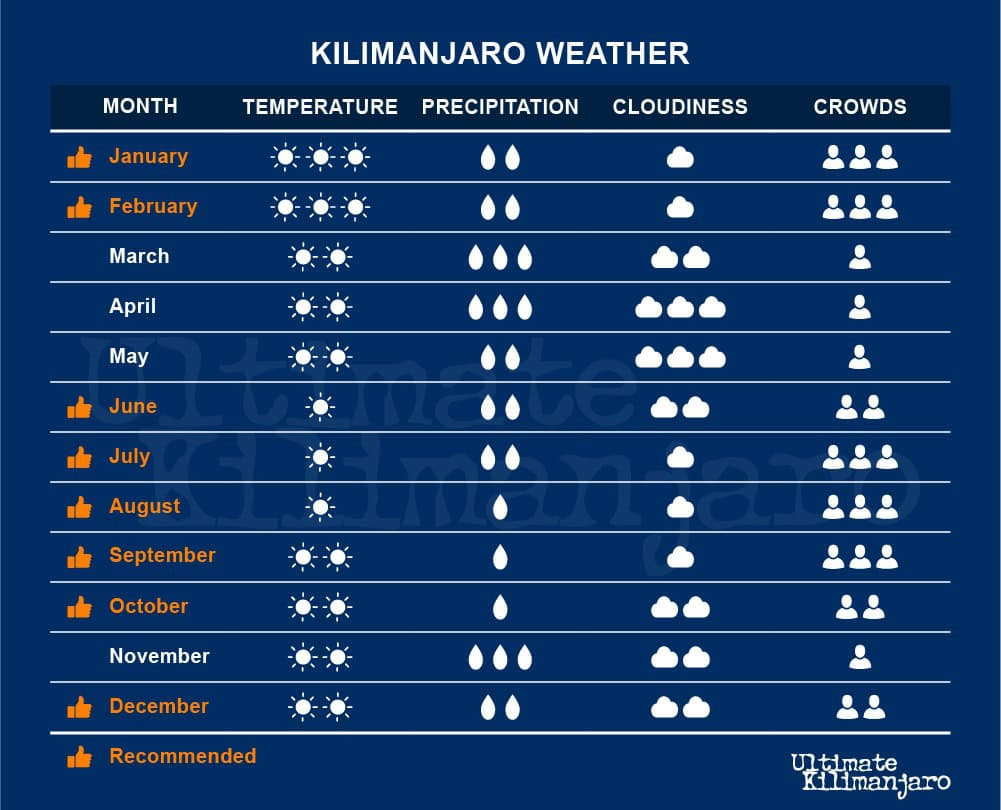
It is possible to hike Kilimanjaro year round, however it is best to go when there is a lower possibility of precipitation. The dry seasons are from the beginning of December through the beginning of March, and then from late June through the end of October. These are considered to be the best months to go in terms of weather, and correspondingly are the busiest times (high season).
The primary issue is safety, as the risks associated with climbing increase significantly when the weather is foul. The effects of rain, mud, snow, ice and cold can be very strenuous on the body. Conversely, with nice weather, your chances of a successful summit increases significantly.
Our group climbs are scheduled to correspond with the dry seasons.
When to Climb Kilimanjaro?
🌤️Short Dry Season (December, January, February, Mid March)
This season is a great time to climb Kilimanjaro, boasting moderate temperatures and the low precipitation levels. These are the warmest months, with excellent visibility. Expect generally clear skies in the mornings and evenings, but during the day, clouds may appear along with brief showers.
December and January are busy months on the mountain, particularly around Christmas and New Years. January and February offer the clearest conditions. March is a transitional month, or shoulder season, where conditions typically change from dry to wet in the middle of the month.
🌧️Long Rainy Season (Late March, April, May, Mid June)
Late March sees the beginning of the rainy season, with conditions becoming increasingly wet. This period is regarded as the worst time to climb Kilimanjaro. Climbing during these months is generally not advised. While experienced backpackers who have trekked in similar conditions may be OK, others should avoid being on the mountain at this time. It can be very wet, with slippery trails, low visibility and heavy clouds.
This is low season; the trails are completely devoid of people during these months.
🌤️Long Dry Season (Late June, July, August, September, October)
This period is considered to be the best time to climb Kilimanjaro. The probability of rain is minimal, skies are mostly clear, and the visibility is unparalleled. The mountain is generally a bit colder, but also drier, which is the most important weather factor.
This is the peak climbing season, coinciding with summer vacations for those living in the USA and Europe. Expect to encounter foot traffic on the trails and crowds at popular campsites.
June is a transitional month, where conditions typically change from wet to dry at the end of the month. July through October are ideal months for climbing. July and August are the busiest months on the mountain, with the crowds thinning in September and even moreso in October.
🌧️Short Rainy Season (November)
November weather can be unpredictable as the short rains make their appearance. Afternoon rains are common, but skies are generally clear in mornings and evenings. Despite the rain, this is not a terrible time to visit as precipitation tends to be mild and there are very few groups on the mountain at this time. If you care more about a solitary experience than having perfectly dry conditions, climbing in November is a good option.
Note that the rains may come early or extend beyond their typical time frames. It’s possible to experience dry weather conditions during the rainy season, just as it’s possible to experience heavy rain during the dry season. Be prepared for all scenarios on your visit.
Summiting During a Full Moon
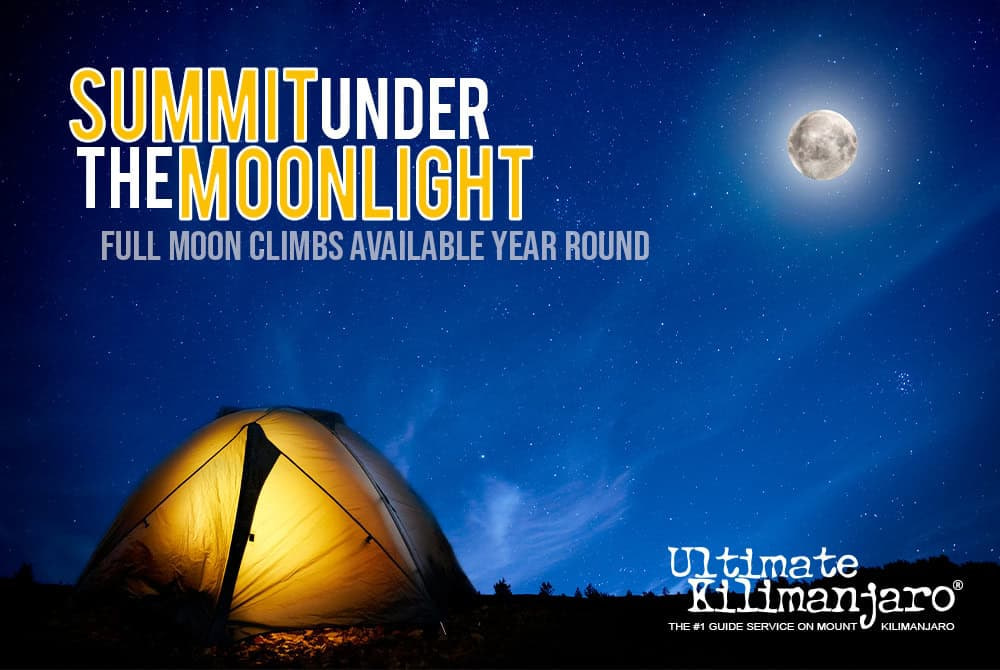
Some climbers prefer to summit during a full moon.
When the peak of Kilimanjaro and magnificent glaciers are lit up by the full moon, the view is absolutely stunning. For this reason alone, some climbers schedule their trek to coincide with this celestial event, occurring once a month. However, a practical reason for climbing at these times is that a bright moon along with a clear sky will improve your visibility throughout your hike, and most importantly, during the summit attempt. Below are full moon dates:
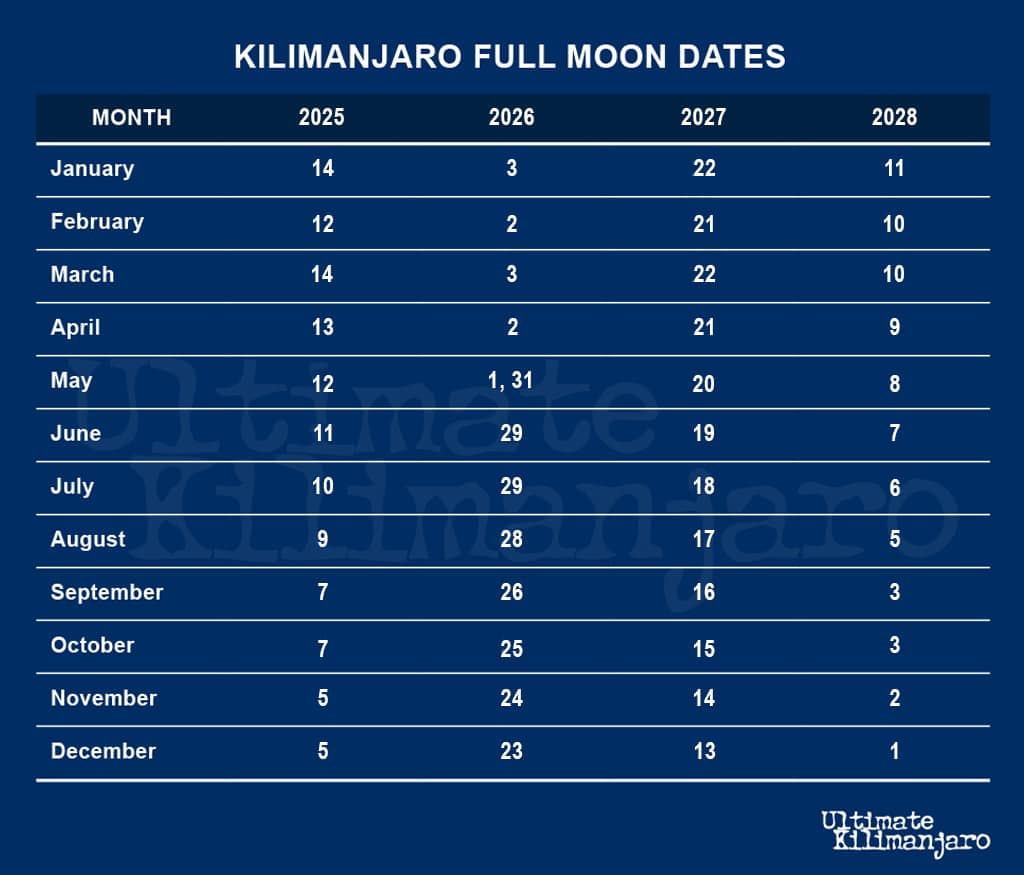
To summit during a full moon, a 7-day climb should start 5 days prior to the full moon date. It is not necessary to summit on the exact full moon date to take advantage of moonlight. A summit on the day before or day after is also beneficial.
We offer several group climbs with full moon summits every month during the dry season. These dates tend to be the first to book completely full well in advance.
For those who favor a less crowded climb, avoid the full moon completely.
Full moon dates attract many climbers. So if it is not important to you, we suggest climbing at a different time. Note that we have many clients who climb with or without the full moon, and clients are equally satisfied with either itinerary.
Another method of dodging crowds is to choose an “off” day of departure. Most climbers will begin their climbs on Saturday, Sunday or Monday, with routes lasting 6 to 7 days.
Kilimanjaro’s Glaciers Are Shrinking
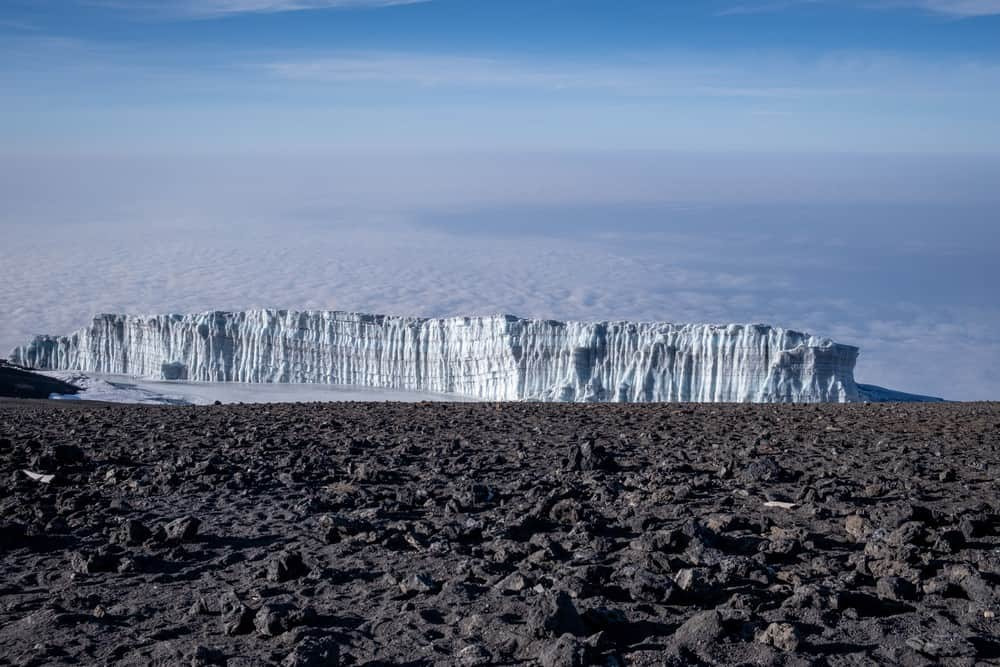
You can go anytime, but do it sooner rather than later.
What makes Mount Kilimanjaro unique is that despite its close proximity to the equator, it is crowned with ice. The glaciers have existed here for more than 11,000 years. They used to be more than 300 feet (100 m) deep and extended 6,500 feet (2,000 m) from the mountain top. However, due global warming and long term climatic cycles, the ice has been vaporizing at an alarming rate.
Some scientists estimate that Mount Kilimanjaro’s ice cap will be completely gone by 2050. So if you are contemplating the climb, do yourself a favor and do it sooner rather than later. The glaciers are something you do not want to miss.